



The event tech landscape in 2026 is unrecognizable from five years ago. AI is doing camera work that used to require a three-person crew. Spatial audio turns a conference hall into an immersive environment. LED stages now achieve cinema-quality color rendering. And audience data is collected, analyzed, and actioned in real time.
This isn't sci-fi. It's shipping. Some of it is expensive; some is surprisingly accessible.
The challenge for corporate planners isn't "should I adopt new tech" but "which innovations actually move the needle for my event, and which are hype?" This guide separates the genuinely transformational from the noise, and helps you allocate budget to what matters.
AI-Powered Event Production
AI in events isn't mystical. It's specific automation that reduces labor or improves quality.
Auto-Framing and Camera Operation
What it does: AI vision systems analyze live camera feed, identify speakers, track movement, and automatically adjust camera framing. A wide-angle camera with AI auto-framing can replace a camera operator in some scenarios.
Example: A PTZ camera with AI recognizes when speaker A steps to the left, and pans to keep them centered. As speaker B takes the stage, it refocuses. No human operator needed.
Reality check: - Works well for predictable events (presentations, panels with fixed positions). - Fails on sudden surprises (unexpected audience members, unplanned stage movements). - Produces decent-not-great framing. Broadcast-quality multi-camera production still needs humans.
Cost considerations: AI-enabled PTZ cameras (Panasonic AW-UE100K, Sony ELC-M100) are available from major AV vendors. Setup is simpler (one camera, no operators), but initial capital can be significant.
When to use: Internal events, training videos, webinars where speaker stays put. Not for high-stakes presentations where every shot matters.
Intelligent Audio Mixing
What it does: AI analyzes multiple microphone feeds in real time and automatically balances levels, removes feedback, and reduces background noise.
Example: Four panelists each with wireless mics. One speaker gets animated and speaks louder; AI reduces their level. Another speaker's mic picks up rustling papers; AI applies dynamic EQ to notch it out. No audio engineer babysitting the console.
Reality: Good for smaller events, adequate for internal use. Live event audio still benefits from human mixing for dynamic control (speaker emphasis, timing, feel).
Cost considerations: Software plugins (iZotope, Antares) are available through various vendors. Hardware audio processors with AI are emerging from Roland, PreSonus, and Behringer.
When to use: Events with budget constraints, internal meetings, recorded content where "good enough" is acceptable.
Content Generation and Highlights
What it does: AI analyzes recorded event footage, identifies key moments (applause, emotional reactions, punch lines), and auto-generates highlight reels.
Example: Your 2-hour conference is recorded. AI identifies the 10 best moments (high energy, laughter, audience engagement), stitches them with transitions, and produces a 3-minute highlight video—overnight, ready to share.
Reality: Results are mixed. AI is good at identifying obvious moments (big applause) but misses contextual meaning. A deeply profound speaker pause may not register as a "moment" to AI. Still, time saved on first-pass editing is substantial.
Cost considerations: Platforms like Runway, Opus Clip (AI video editor), or Descript (AI transcription + editing) are available through various subscription models.
When to use: Post-event content workflow. Auto-generate first draft, then human editor refines.
Spatial Audio
Most event audio is stereo (left and right speaker channels). Spatial audio is immersive, three-dimensional sound that surrounds the listener.
What It Is
Stereo: 2 channels (L/R). Sounds come from left or right.
Spatial audio (immersive, object-based): Dolby Atmos, Sony 360 Reality Audio, DTS:X. Audio objects have precise 3D position. A sound can come from above, below, behind, or all around.
Headphone spatial audio: Apple Spatial Audio, Sony 360 RA. Head-tracking so sounds remain positioned in 3D space as listener turns head.
Application to Events
Live concerts/performances: - Musician's voice comes from center. - Drums from left, guitar from right, bass from below (subwoofer). - Ambience surrounds the room. - Listeners feel immersed, not just hearing.
Hybrid events with remote speakers: - Remote speaker's voice positioned at stage location (3D projection of where they are). - Makes remote presence feel less "disconnected" and more "present."
Immersive environments (brand activations, product launches): - Audio guides viewers through space. - Sound design becomes environmental architecture. - Creates memorable, multi-sensory experience.
Implementation
Venue requirement: Spatial audio playback needs multiple speakers (not 2-channel stereo): - Center, left, right (main). - Surround left/right (ambient). - Top/height speakers (immersion). - Subwoofer (low frequency). - Total: 8+ speakers properly positioned and level-balanced.
Most conference halls and auditoriums don't have this infrastructure. Installation cost varies depending on venue size and complexity.
Content creation: Capturing spatial audio requires multitrack recording (separate mics for each speaker position, mixed into spatial format). Not all production companies offer this yet.
Cost considerations: Access to spatial audio playback and rigging is available for well-designed systems in various room sizes.
Reality check: Spatial audio is powerful but requires commitment to venue capability and content creation. It's not a quick add-on. Reserve it for high-stakes events (major product launch, immersive brand experience) where budget allows.
XR Stages and Virtual Sets
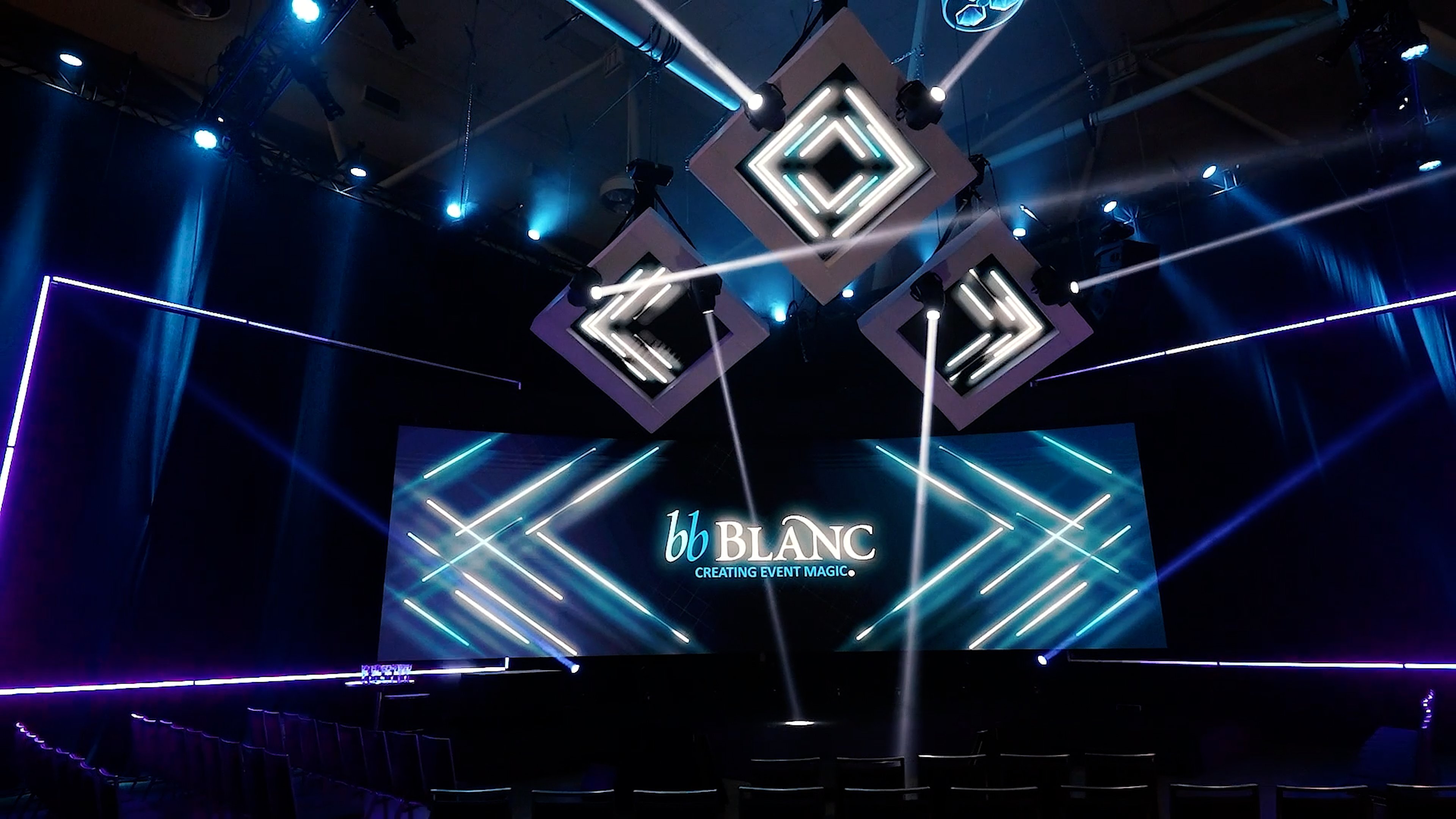
XR (extended reality) = mixing real and virtual. A speaker stands in front of a virtual background that responds to camera movement. The audience sees a cinematic stage that doesn't exist.
How It Works
Camera tracks position in 3D space. As the camera moves left, the virtual background shifts to maintain perspective—creating illusion of depth and physicality.
Real speaker interacts with virtual elements. Speaker points to a virtual chart, touches a virtual object, walks through a virtual environment. Integration looks polished on camera.
Technology: LED volume (LED wall behind/around stage), real-time game engine (Unreal Engine, Unity), motion tracking (camera position sensors).
Applications
Product launches: Presenter in front of massive, dynamic 3D product visualization. Looks cinematic, far more impactful than static slide.
Remote presentation: Speaker in studio, background is virtual corporate office, virtual client site, or branded environment. Hybrid attendees see polished presentation; no cheap Zoom background.
Interactive storytelling: Presenter guides audience through virtual world (facility tour, historical recreation, speculative future scenario).
Cost and Reality
LED volume: High-resolution LED wall (20'×12', 2.5mm pixel pitch, cinema quality) is available for purchase or lease through major AV vendors.
Content creation: 3D environment design, animation, and real-time setup are available depending on complexity and duration.
Camera tracking and engine: Real-time rendering at broadcast resolution (1080p60+) requires powerful GPU/CPU infrastructure, plus engineer support.
Total cost: XR stage productions (LED + virtual set combinations) vary based on event size and customization level.
When it makes sense: Major corporate event (board presentation, market announcement), brand activation, premium client experience. ROI is brand impact and audience memory, not cost savings.
Learning curve: XR stage operations are specialized. Not all production companies offer it. Require experienced crew and advance planning.
Advanced LED Technology
LED video walls have been around a decade, but 2026 is seeing a breakthrough in quality and accessibility.
High Frame Rate and Resolution
Historical issue: LED walls at 60 fps looked slightly jittery on camera (moiré patterns). Cinema-grade footage was 24-30 fps.
2026 innovation: LED walls now common at 100+ fps, eliminating flicker. Combined with sub-1mm pixel pitch (extremely high resolution), on-camera appearance rivals cinema projection.
Examples: Liant LEDscape, GLP Impression X4, Brompton Technology CinemaQuest. All achieving broadcast-quality image without color banding, flicker, or digital noise.
Color Accuracy and Consistency
Older LED walls had color inconsistency across modules. 2026 walls feature: - Factory calibration to specific color standards (DCI-P3, Rec 2020). - Hardware color correction per section, not just overall. - Consistent brightness across zones (helps with stitching multiple screens). - Black level consistency (critical for cinema-quality appearance).
Result: LED backgrounds look genuinely photographic now, not "video wall-ish."
Modularity and Market Accessibility
LED walls are moving toward modular, production-friendly modular systems. Instead of one giant wall, you configure 2×2 meter tiles, snap them together, and control via networked processors.
Availability: 2×2m high-quality LED tiles (sub-1mm pixel pitch) are available from major AV equipment providers. Larger walls can be configured from multiple tiles.
Setup: More complex than projection (requires power distribution, networking, calibration), but feasible for corporate events.
Advantage: Reusable assets. Small LED wall tile rented for your conference can be rented again next month for another event. Economics scale.
Integration with Camera Tracking
Combine LED wall with camera tracking (see XR section above), and you can achieve photorealistic virtual environments for broadcast. This is where cutting-edge events are headed.
Sustainable Event Tech
Growing pressure to reduce carbon footprint is pushing innovation in energy-efficient, sustainable event technology.
Energy-Efficient Lighting
LED vs traditional: - Tungsten lights: 1000W for moderate brightness, generate heat. - LED panels: 200-400W for same brightness, no heat waste. - Cost over 10-hour event: Tungsten ≈ 10 kWh, LED ≈ 3 kWh. LED saves 70% energy.
Trend: Venues increasingly require events to use LED-only lighting. Some even offer rebates for events under certain power thresholds.
Reality: LED is now standard. No production company is renting tungsten anymore (except for specific aesthetic needs, like warmth in film production).
Low-Power Encoding and Streaming
Streaming used to require high-powered encoders consuming 1-2 kW per stream. Modern encoders (hardware-accelerated video encoding, 10th-gen GPU and later): - Consume 200-400W. - Achieve same bitrate. - Reduce carbon footprint and heat generation (less AC needed).
Trend: Focus on efficiency metrics. Event organizers asking: "What's the power consumption of your encoder?" Production companies responding with spec sheets.
Sustainable Materials
Reusable set pieces: Instead of building disposable sets, companies are designing modular, recyclable stage structures that get reused across events.
Recycled cabling: Industry pushing for cables manufactured with recycled copper and PVC-free jackets.
LED screen reuse: Modular LED tiles (see above) can be reconfigured and reused indefinitely, vs older monolithic walls that became e-waste.
Minimal packaging: Vendors reducing Styrofoam and cardboard, transitioning to reusable flight cases and bins.
Carbon Offsetting
Some venues and production companies are offering carbon credits. Example: Your event's streaming uses X kWh; production company purchases offsetting windmill/solar credits.
Reality: Carbon offsetting is better than nothing but is greenwashing if not backed by verified credits (Verra standard, Gold Standard). Verify claims.
Venue Impact
Corporate planners increasingly selecting venues based on: - Existing LED/energy-efficient infrastructure. - Renewable energy onsite (solar, geothermal). - Waste management programs (recycling, composting). - Sustainable catering partnerships.
Trend: Building sustainability requirements into RFP criteria. For example, asking venues to demonstrate measurable reductions in energy consumption and carbon output compared to conventional event spaces.
Audience Analytics
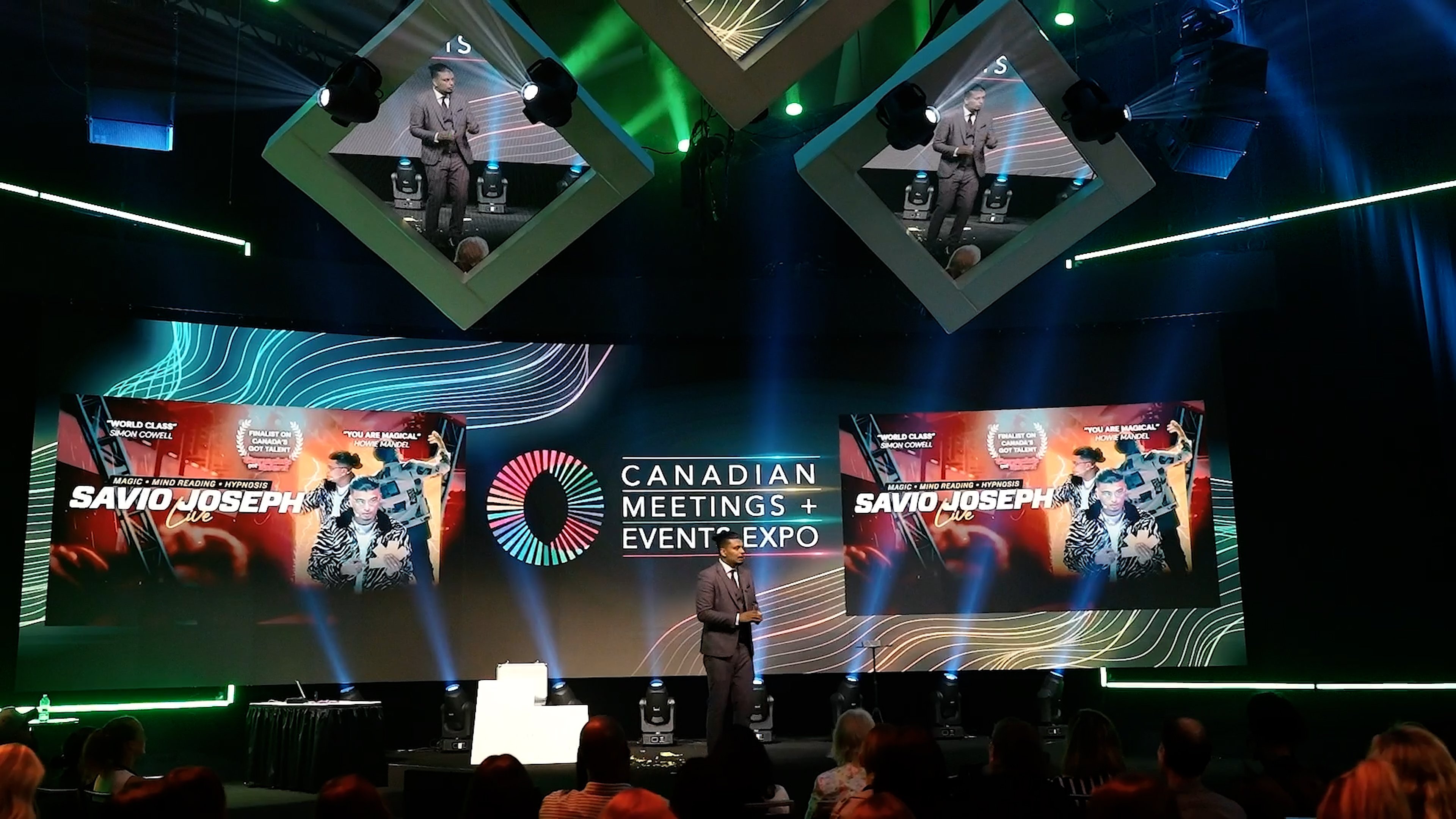
Real-time data on audience engagement is reshaping how events are measured and optimized.
Engagement Metrics
Traditional: Post-event survey. "On a scale of 1-5, how would you rate this session?" Results come back weeks later.
2026 reality: Real-time engagement tracking via: - Video stream analytics: Heatmaps showing where viewers are looking on screen. If everyone's eyes leave the speaker at 45 minutes, engagement dropped—fix it now. - Chat and reaction sentiment: AI analyzes chat messages and reactions (emoji, text) to gauge moment-by-moment sentiment. At which speaker did enthusiasm spike? When did interest wane? - Biometric data (if attendees consented): Heart rate, attention sensors via wearables. Correlate physiological response with content. - Polling in real-time: Pop polls every 10 minutes. Responses aggregated and visualized live for presenters.
Behavioral Analytics
Session attendance: Track which sessions attendees joined, for how long, did they stay or leave early.
Network analysis: Who connected with whom? Identify high-engagement attendees (good sponsor prospects) vs passive attendees.
Content drift: Which topics did attendees research before/after? Cross-reference webinar content with attendee job function to identify learning paths.
Sponsor ROI: Which sponsored booth had most traffic? Which sponsors' content had highest engagement? Quantify value delivered.
Implementation
Lightweight tracking: Attendee badges with RFID tags, beacon readers at session entrances. Attendance data collected automatically.
Video analytics: Stream platform (YouTube, Vimeo, LinkedIn) provides built-in analytics. View count, watch time, engagement rate, viewer geography.
Unified dashboard: Third-party platforms (Splash, Airmeet, Hopin) aggregate data from multiple sources into single dashboard. Presenters see live engagement. Event organizers see post-event ROI breakdown.
Cost considerations: Built-in if using managed event platform; added analytics tools are available at various price points depending on sophistication.
Privacy Considerations
Collecting biometric or behavioral data requires: - Clear opt-in disclosure. - Data protection compliance (PIPEDA in Canada, GDPR in EU, CCPA in California). - Secure storage and deletion timelines. - No data selling to third parties without consent.
Responsible analytics: Ethical event organizers are transparent about data collection and prioritize attendee privacy.
Accessibility Technology Trends
One underappreciated trend in 2026: Accessibility tech becoming standard, not optional.
Closed Captioning and Live Transcription
Live captioning: No longer just for deaf and hard-of-hearing audiences. Live captions benefit: - Non-native speakers (captions help comprehension). - Attendees in noisy environments (can follow content via text). - Searchability (captions make content discoverable and indexable). - Compliance (Canada, US, and EU require captions for public-facing content).
Service options: - Platform auto-captions (YouTube, LinkedIn, Teams): Free, 80-90% accuracy. Suitable for internal events. Not great for accents or technical terminology. - Live stenographer (traditional): 99%+ accuracy. Available for high-profile events. - AI-powered live captioning (Verbit, Rev, Otter.ai): 95%+ accuracy. Best balance of cost-effectiveness and accuracy.
Recommendation: Use platform auto-captions as baseline. If budget allows, upgrade to AI service for professional events. Display captions visibly on-screen (not just in chat).
Audio Descriptions and ASL Interpretation
Audio descriptions: For attendees who are blind or low-vision, someone narrates what's happening on-screen. "On the left, three executives sit at a panel table. The woman on the left nods as the center speaker makes a point."
Audio descriptions: Specialist audio describers are available if you're committed to full accessibility.
ASL interpretation: American Sign Language interpreters are available for Deaf attendees. Standard practice for public events in accessible environments.
Reality: Most corporate events don't budget for these. But accessibility is becoming expected, especially for public-facing or large events. If you're streaming a webinar and want to reach 100% of potential audience, add captions and descriptive audio.
What to Invest In Now vs Watch
For corporate events, bb Blanc recommends a practical approach: adopt proven technologies that solve real problems before exploring emerging innovations.
Invest Now (Clear ROI, Proven Technology)
Spatial audio in right context: High-impact events (product launch, immersive brand experience) see measurable uplift in attendee memory and engagement. If your event budget supports it, spatial audio delivers meaningful value.
Advanced LED: Cinema-quality LED walls have crossed the cost-benefit threshold. For events where visual impact matters (product showcase, corporate branding, broadcast appearance), LED is worth the investment.
Audience analytics: Real-time engagement tracking improves event execution and post-event ROI measurement. Low cost to implement (use platform's built-in analytics), high value.
Sustainable LED lighting: No reason to rent tungsten anymore. All new production uses LED for energy, cost, and environmental reasons—standard practice at forward-thinking production companies like bb Blanc.
AI-assisted post-production: Auto-generated highlight reels and transcripts save weeks of editing labor. ROI is immediate for any event generating significant video content.
Watch (Emerging, High Cost, Unproven ROI)
XR stages: Powerful for the right event, but cost and complexity are high. Implementation still requires expert teams (limited availability). Monitor for another 12-18 months as the technology matures and rental ecosystem develops.
AI camera operation: Good for very specific use cases (simple presentation capture, webinar, training content). Not ready for complex multi-camera live events. Wait for wider adoption before investing heavily.
Biometric engagement sensing: Privacy concerns, consent complexity, and integration challenges mean this remains niche. Wait for clearer industry standards and privacy frameworks.
Holographic display: Holograms at events are technically feasible but expensive and limited to specific venue types. Watch for cost reduction, but not mainstream in 2026.
Ready to discuss your next event? Contact bb Blanc to start the conversation with our production team.
Implementation Roadmap: Phased Technology Adoption
Don't try to implement everything at once. Build a roadmap based on your event maturity and goals.
Year 1 (Foundation)
Invest in: - Professional LED backdrop (sub-1mm pixel pitch). Available from production partners. ROI: Dramatically improves video/broadcast appearance, worthwhile for major events. - Sustainable lighting (LED, not tungsten). Cost: Standard production practice now, no additional cost. ROI: Environment + lower power consumption. - Basic audience analytics via platform (YouTube, LinkedIn built-in). Cost: Free (platform included). ROI: Understand viewer behavior, engagement patterns.
Watch, don't buy: - AI camera operation (not ready for complex events yet). - Spatial audio (high cost, limited venue compatibility). - XR stages (too expensive for most events, still maturing).
Year 2 (Enhancement)
Build on Year 1 with: - Real-time polling and sentiment analysis (Slido, Mentimeter). Available through various subscription models. ROI: Quantifiable engagement data, better decision-making during event. - Multi-platform streaming (simultaneous YouTube + LinkedIn + internal player). Cost: Minimal (one encoder, split output). ROI: Expanded reach, multiple audience segments served. - Post-production highlights automation (Runway AI, Opus Clip). Available through subscription services. ROI: Faster content turnaround, repurposing of assets.
Consider piloting: - AI-framing for simple events (webinars, internal meetings). Test cost-benefit before rolling to large events.
Year 3 (Optimization)
If Year 1 & 2 successful: - Spatial audio for high-stakes events (product launch, immersive experience). Available through major AV vendors. ROI: Premium attendee experience, media buzz, differentiation. - XR stage (virtual sets, motion tracking). Available through specialized production companies. ROI: Brand impact, content value, unique visual experience. - Advanced biometric analytics (optional, privacy-permitting). Available through various platforms. ROI: Deeper engagement measurement, personalized content recommendations.
Make permanent investments: - Consider in-house LED inventory if doing 4+ events/year with consistent LED needs. - Hire dedicated data analyst role if analytics driving business decisions (lead gen, content strategy).
Technology Trends Beyond 2026
What's on the horizon that might matter in 2027+?
Holographic Display Evolution
Holographic displays (Pepper's ghost tech, volumetric displays) are technically feasible but expensive. Expect prices to become more accessible by 2028 as manufacturing scales. Current use cases: High-fashion shows, tech conferences, museum exhibits. Not yet standard for typical corporate events. Watch this space for premium events 2-3 years out.
Modular Event Tech Stacks
Instead of one vendor providing everything, the trend is modular: Pick best-of-breed components and integrate them.
Example stack: - Camera: Sony (cinema quality) - Audio: Behringer (excellent mixing at accessible price) - Switching: Blackmagic (reliable, industry standard) - Streaming: Custom RTMP to multiple platforms (maximum flexibility) - Analytics: Segment or Amplitude (enterprise-grade analytics) - Graphics: Adobe Creative Suite (lower-thirds, animations)
This modular approach offers maximum flexibility but requires technical depth to integrate. Suitable for companies doing 4+ major events/year with dedicated AV team.
Alternative: Work with full-service vendor (like bb Blanc) who integrates modular components for you. Simpler, less technical overhead, but less customization.
Real-Time Translation at Scale
Live translation (speech-to-text-to-speech in multiple languages) is improving fast. Tools like Google Translate, Microsoft Translator, and specialized platforms (Verbit, Rev) are reaching 95%+ accuracy. By 2027, real-time translation into 20+ languages during live events will be more accessible.
Current state (2026): English-to-Spanish/French/Mandarin is reliable. Niche languages still error-prone. Live caption accuracy is 90-95%; human accuracy is 99%. Suitable for internal/low-stakes events; risky for high-profile presentations.
Transformative potential: Makes global events significantly more accessible. No longer need to hire multilingual interpreters for every language. Scalable to unlimited attendees. Real advantage: Remote attendees in different countries can watch in their native language without leaving the stream.
Implementation: Leverage platform capabilities (YouTube auto-captions) or third-party service (Verbit, Rev). Test thoroughly with your speakers beforehand. Accuracy matters—mistranslations can embarrass.
Generative AI Content Creation
AI video generation (text-to-video, avatar-based presentations) is advancing rapidly. By 2027, you could generate synthetic speaker videos ("Here's an AI-generated CEO address to 100 regional offices"). Ethical concerns remain (deepfakes, authenticity), so adoption will be niche initially.
Current tools: Synthesia, D-ID, Heygen allow you to input text and generate video of an avatar speaking that text, in multiple languages, with natural lip-sync and expression. Quality is good; feels slightly artificial but improving.
Use cases that make sense: - Training videos (compliance, onboarding, product education). Faster than hiring actors/speakers. - Localized content (same message, different languages, different "speakers"). - Asynchronous greetings or announcements (CEO greeting to regional offices, no need to record actual video).
Use cases that don't make sense: - Live events or high-stakes presentations. Authenticity and human connection matter. - Masquerading as a real person (unethical and increasingly illegal in jurisdictions with "deepfake" laws).
Watch for use in training, recorded content, not live events. The technology works; the ethical and trust implications need more exploration before mainstream adoption.
Brain-Computer Interfaces (BCI) for Engagement
Experimental stage: Wearable headsets that measure attention/focus. Too early for adoption, but 2-3 years out could enable fascinating engagement measurement. Skip for now; too privacy-intensive, too speculative.
Technology Investment Philosophy
Not every new technology is worth adopting. Use this framework:
- Does it solve a real problem? (Not just "we could do this.")
- Does it improve attendee experience? (Or does it benefit only the organizer?)
- Can we execute it well? (Do we have expertise, or do we need hire specialists?)
- Is cost justified by ROI? (Does it generate leads, improve retention, reduce costs, or deliver measurable value?)
- Can we maintain it? (Or is it a one-off that'll be outdated next year?)
Apply this filter and you'll make smarter tech bets. Most successful events don't adopt bleeding-edge tech; they adopt mature technology executed exceptionally well.
Next Steps
Event technology in 2026 is fragmented. What's innovative for one company is table-stakes for another. The key is identifying which technologies move the needle for your event goals, not chasing what's trendy.
Ask yourself: Does this technology solve a problem we have? Does it improve attendee experience meaningfully? Does the cost justify the benefit?
Most corporate events will benefit from better LED backdrops, sustainable lighting, and basic audience analytics. The premium plays (spatial audio, XR stages, advanced AI) are for high-stakes events where budget is unconstrained and ROI is clear.
Related resources: - Audiovisual Production Services - LED Booths & Trade Show AV in Canada - How to Plan Audio Visual for Corporate Conferences in Toronto - The Future is Live: Key Trends in AV & Event Production from InfoComm 2025

