



You're planning a corporate conference for 300 people. You request two quotes for AV support.
Quote A: Equipment rental company provides cameras, audio mixer, microphones, and projector—delivered, set up, and ready to run. You'll need to hire a freelance camera operator and handle the technical direction yourself.
Quote B: Production company provides cameras, audio engineer, technical director, lighting technician, and real-time support throughout the event. They manage shot composition, audio levels, lighting adjustments, and problem-solving on the fly. Total: different pricing. You focus on running your event.
Both are "AV solutions." But they solve different problems.
The rental-equipment model works for small events where content is straightforward and stakes are lower. But for corporate events—conferences, product launches, board meetings, awards galas—the difference between renting equipment and hiring production expertise is the difference between having gear that works and having a production that performs.
This article compares the two approaches, explains what you actually get from each, and shows when to rent equipment and when you need a production partner.
What AV Rental Actually Means
When you rent AV equipment in Canada, you're typically renting physical assets: cameras, audio mixers, wireless microphones, video switchers, lighting rigs, monitors. The rental company delivers the gear, you (or a hired operator) operate it, and you return it when you're done.
The distinction matters most when the stakes are highest. An audio visual Toronto event with executive visibility requires production-level support, not a delivery truck and a manual. Organizations comparing audio visual Canada providers should evaluate whether the company operates as an audio visual production company Canada-wide with creative and technical depth, or simply rents inventory. The best AV production Canada partners function as a national event production company Canada clients trust for consistent execution across cities. For corporate AV production Canada engagements, full-service production delivers measurably better outcomes: tighter show flow, fewer technical failures, and stronger audience engagement. The same applies to event production Canada and event production company Canada evaluations at every budget level.
Equipment-only rental is the baseline model. The rental company: - Delivers equipment to your venue - Assists with basic setup and configuration - Provides remote support if gear fails during the event - Picks up equipment after the event - Replaces broken equipment (if available) or troubleshoots remotely
What the rental company typically does not manage: - Creative decisions (shot framing, transitions, which camera is on at any moment) - Real-time problem-solving (audio level adjustments, lighting fixes, microphone troubleshooting) - Quality assurance (ensuring video is in focus, color is correct, audio is clean) - Technical direction (coordinating between cameras, video switchers, and graphics) - Risk mitigation (redundancy, backup systems, failover procedures)
In short: You get equipment. You don't get a production.
What Full-Service AV Production Includes
A production company doesn't just deliver gear. It delivers a complete production ecosystem designed around your specific event objectives.
Equipment + Expertise Paired
A production company typically provides: - Professional-grade equipment selected specifically for your event scope, venue, and goals (same types of cameras and gear a rental house carries, but chosen strategically). - Crew with specialized roles: Camera operators, audio engineer, technical director, lighting technician, and production manager. - Creative strategy: Understanding your event's messaging, goals, and audience before day one, then executing a plan to deliver the right shots and production quality.
Real-Time Problem-Solving
The critical difference: A production company is responsible for the outcome, not just the equipment. If something goes wrong: - Audio buzzes? The audio engineer diagnoses and fixes it immediately. - Main camera loses focus? The camera operator recovers or a backup camera is ready. - Lighting looks harsh? The lighting tech adjusts gels or intensity on the fly. - Video is out of sync? The technical director catches it and corrects it before the audience notices.
With rental-only, you troubleshoot or call the rental house for remote help. With production, the fix happens in real time.
Show Calling and Direction
A production company manages who does what and when
-Cuing camera transitions precisely to your speaker's timing
- Managing Q&A microphones and ensuring all questions are captured
- Switching to pre-recorded videos or graphics at the exact moment
- Adjusting lighting for different speakers or segments
- Managing live streaming or recording and ensuring quality standards
A rental house provides a camera; a production company ensures that camera is on the right subject, at the right angle, with the right exposure, at the right time.
Pre-Event Planning and Strategy
Production companies invest time before your event: - Site surveys to understand venue constraints, power availability, internet quality, sightlines - Production meetings to align on your objectives, speaker list, technical requirements - Load-in planning to optimize setup time and sequencing - Run-throughs to test equipment, timing, and cues - Contingency planning for equipment failure, speaker delays, or schedule changes
A rental house might send a technician the day of; a production company is already involved weeks before.
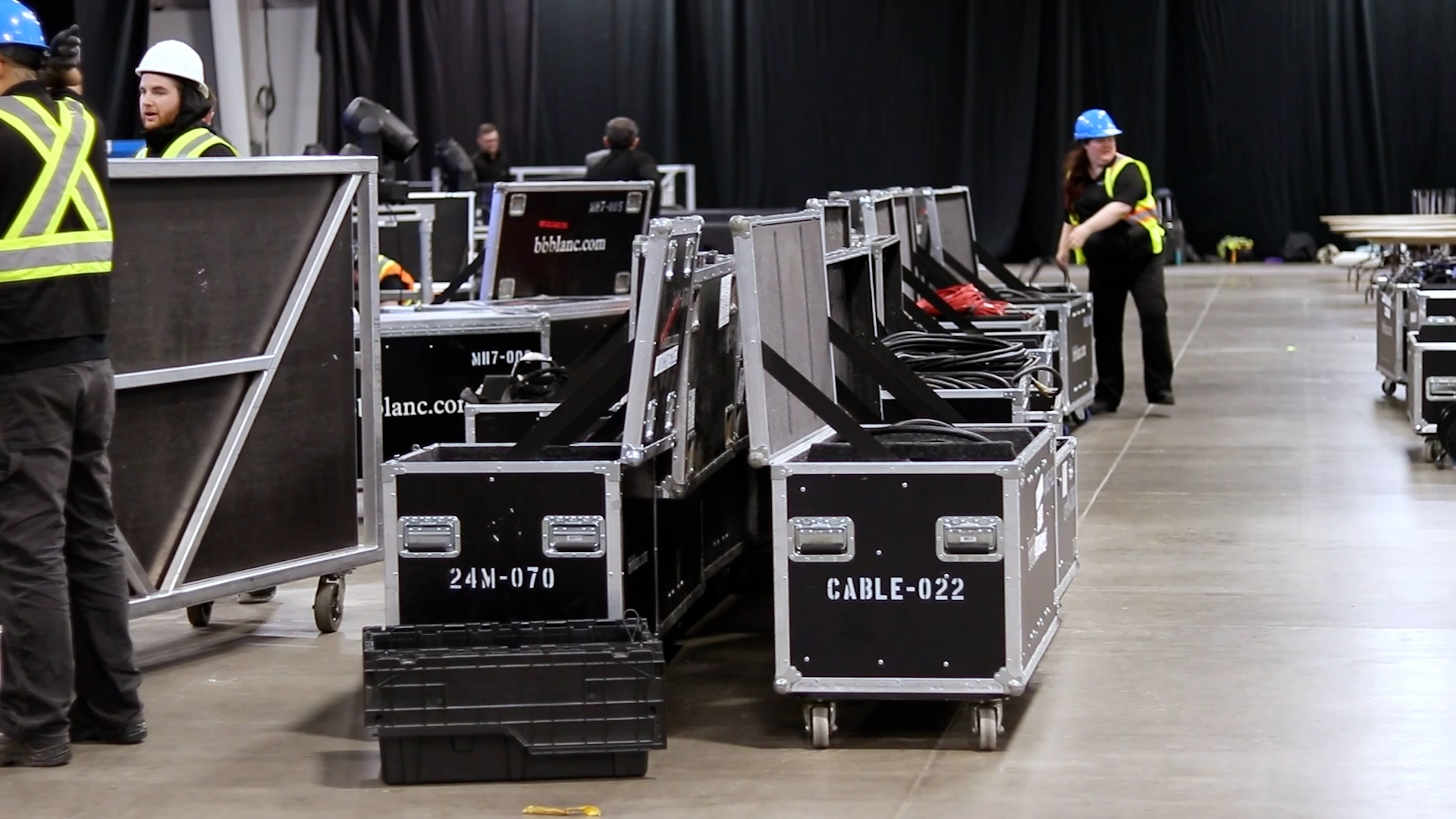
The Hidden Costs of Rental-Only Approaches
When you choose equipment-only rental for a corporate event, you're not saving money—you're shifting costs and risks. Here's why.
Coordination Burden
You become the production manager. You must: - Hire crew separately: If rental includes no operators, you source camera operators, audio tech, and technical director independently. This adds administrative work and coordination complexity. Manage crew: You brief them on your event, objectives, and cues. You handle on-site coordination. You manage timing and problem escalation. - Make on-the-fly decisions: If equipment fails or timing changes, you decide how to respond. Without production experience, decisions may impact quality. - Handle setup and strike logistics: If crew isn't included, you're coordinating equipment delivery, dock access, power, internet, assembly, testing, and teardown.
Operational cost: This burden might not show up as a line item, but it's real time and energy from your team.
Quality Risk
Rental-only works if: - Your freelance operator knows the specific equipment well - Your operator understands your event's flow and goals - Your audio tech can troubleshoot issues without support - You have redundancy if a key person is unavailable
Most of these "ifs" don't materialize. A freelance operator you've never worked with may not know your equipment or your style. An audio tech might miss a subtle buzz that ruins a critical speech. If a camera operator calls in sick day-of, you're scrambling.
A production company invests in trained, equipped crew that works together, knows contingencies, and owns the quality outcome.
Lack of Accountability
Here's the legal reality: When you hire a rental company, they deliver equipment and basic support. When something goes wrong—poor video quality, audio problems, missed shots—the rental company's obligation ends. You can't claim the video was out of focus; you didn't hire a camera operator from them.
With a production company, quality is contractual. If the production doesn't meet standards, the production company is accountable. This accountability usually leads to better execution because the crew knows their reputation is on the line.
Inefficient Setup and Breakdown
Rental-only means you're managing logistics. Rental companies deliver equipment; they don't optimize for your specific event flow. Setup might take longer because there's no integrated plan. Crew (if hired separately) aren't familiar with the equipment or with each other.
A production company orchestrates setup as part of their standard process. They know cable runs, power sequencing, testing protocols, and efficiency because they do it repeatedly.
No Strategic Direction
A rental company provides what you ask for. A production company provides what you need. If you ask for one camera but need three to cover your stage and audience, the rental company sells you one camera. A production company, through pre-event planning, recommends three because they understand your objectives.
Rental vs Production: Decision Framework
Here's when each model makes sense.
Choose Equipment Rental If:
- Small event (under 100 people): Basic presentation, simple AV (projector, microphone, mixer). Complexity is low; quality impact is lower.
- Internal meeting or small gathering: No external audience, no recording, no streaming. Crew expertise matters less.
- You have in-house AV expertise: Your organization has trained technical staff who can operate equipment professionally. You're just adding gear.
- Simple, straightforward content: Single speaker, fixed camera position, standard lighting. No complex transitions, graphics, or live elements.
- Budget is absolute constraint: You cannot afford production crew. Rental is the only option; accept the quality trade-off.
- Predictable, repeating event: You've run this event before. You know what works. You're replicating a known formula.
Choose Full-Service Production If:
- Medium to large corporate event (100+ people): Conference, product launch, awards gala, board retreat. External audience, recording, or streaming.
- Executive or board-level attendance: Reputation is on the line. Quality must be high. No margin for technical errors.
- Complex program: Multiple speakers, segments, pre-recorded content, graphics, interactive elements, Q&A. Coordination is non-trivial.
- You want to focus on content and agenda: You don't want to manage AV logistics. You want crew handling technical details so you focus on running the event.
- Recording, streaming, or multi-location coverage: You need professional-quality output that's usable afterward (video file, stream recording). Amateur operation won't work.
- First-time event: You don't have institutional knowledge of what's needed. A production partner brings expertise and planning.
- Venue is challenging: Difficult acoustics, poor lighting conditions, complex setup, limited power, or other technical constraints requiring experienced crew.
The Hybrid Approach
Many medium-sized events use a hybrid model: - Core crew from production company: Technical director and one camera operator (ensures direction and quality). - Equipment supplement from rental house: Additional cameras, lighting, audio gear (cost savings). - You manage content: Speakers, timing, on-stage elements. You're not managing AV logistics.
This balances cost with professional output.
How to Evaluate Whether You Need a Production Partner
Ask yourself these questions:
1. What's at stake if AV fails? - If your CEO's speech is recorded and distributed internally or externally, AV failure is high-risk. - If a product launch hinges on video demos, stakes are high. - If it's a 50-person internal meeting, stakes are low.
Higher stakes = stronger case for production.
2. What's the complexity of your program? - Simple (one speaker, fixed shots): Rental may work. - Moderate (two speakers, multiple stages, some graphics): Hybrid or production recommended. - Complex (multiple segments, live polling, multi-camera coverage, graphics throughout): Production essential.
3. Do you have internal AV expertise? - Yes, trained operator on staff: Rental with your person operating = efficient. - No expertise in-house: Production company provides expertise and accountability.
4. What's the format? - Live event, in-person only: Rental can work if simple. - Hybrid (in-person + remote attendees, or streaming): Production essential. Streaming requires technical competence, timing, quality control. - Recording for post-event use: Production. A single camera isn't professional. Multiple cameras, proper audio, good lighting, and editing are needed.
5. What's the budget reality? - If you have budget for crew + equipment: Production. - If budget covers equipment only: Rental, but understand the quality trade-off. - If budget is tight: Hybrid (core crew + some rental equipment).
6. Is this a repeating event? - First time: Production recommended (you need expertise and planning). - Repeating: After first time, you know what works. Hybrid or rental may be sufficient.
What to Expect from Full-Service Production Like bb Blanc
A production company like bb Blanc operates differently than a rental house.
Pre-Event Phase (Weeks Before)
Discovery and planning: - Initial consultation to understand your event objectives, audience, format, technical requirements, and any constraints. - Formal proposal outlining scope, crew, equipment, timeline, and deliverables. - Production meeting(s) with you to review program flow, speaker list, timing, any pre-recorded content, graphics, and technical cues.
Site survey and planning: - Visit venue to assess power, data connectivity, sightlines, stage setup, audience layout, and any technical constraints. - Identify equipment requirements based on venue and program. - Develop a production diagram (camera positions, audio mic placement, lighting plan, video workflow). - Create contingency plan for equipment failure, speaker delays, or technical issues.
Crew assignment and prep: - Assign crew roles and brief them on your event objectives. - Finalize equipment selection and ensure all gear is available and tested.
Load-In Day
Early setup (2-4 hours before event start): - Crew arrives, unloads equipment, secures dock and power. - Audio engineer runs mic cables, tests wireless systems, sets mixer levels. - Camera operators position cameras, test focus, set exposure for venue lighting. - Lighting tech assesses venue lighting and supplements with designed rig if needed. - Technical director confirms video workflow: preview monitors, graphics systems, streaming encoder. - Run-through of program (if time allows) to validate timing, cues, camera shots, audio levels.
Complete testing of all systems before audience arrives.
Event Day
Pre-event support: - Crew arrives 30-60 minutes before doors open. - Final system check, mic tests, graphics confirmation. - Monitoring of live audio, video, and any technical elements.
Live show management: - Technical director calling camera shots and managing video output in real time. - Audio engineer monitoring levels, cueing speakers, managing any live audio issues. - Camera operators executing shots, managing movement, staying on cue. - Production manager (or lead crew) coordinating crew and managing any issues.
Post-event wrap: - Crew remains until all equipment is secured and packed. - Delivery of raw footage or recording, if applicable.
Post-Event Phase
Deliverables: - Raw or edited video file (depending on contract). - High-resolution photos (if photographer is included). - Any post-processing or color correction (depending on scope). - Timeline for delivery.
Debrief (optional): - Brief recap of what worked, challenges encountered, and lessons for future events.
Accountability and Support
A production company doesn't just show up. They: - Are responsible for quality outcome - Proactively solve problems before they impact your event - Have insurance and liability coverage - Can provide references from similar corporate events - Have a track record you can verify
Learn more about how bb Blanc approaches corporate event production and how to choose a production partner for corporate events
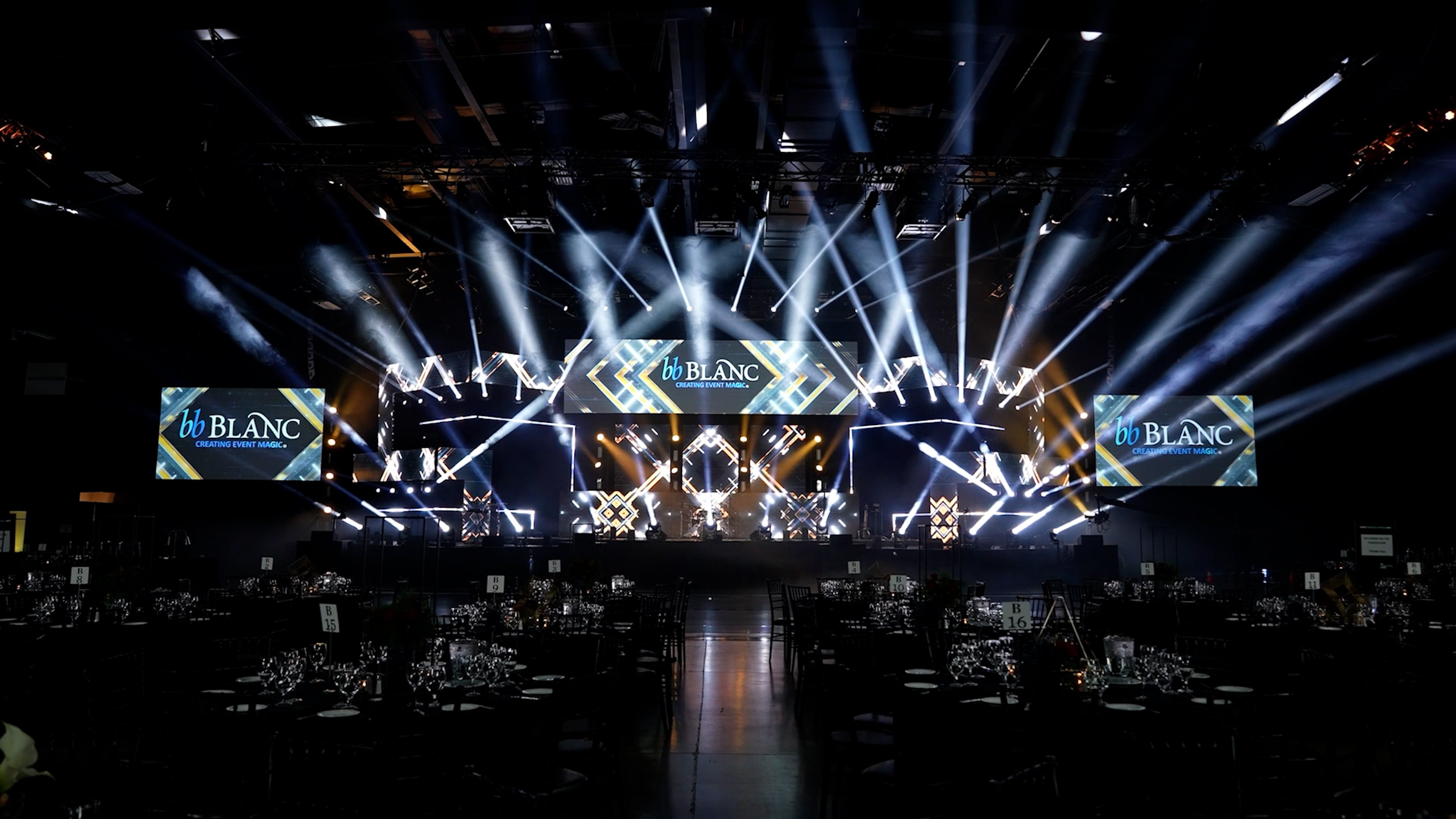
Evaluating Production Companies vs Rental Houses
When you're comparing quotes, understand what you're actually comparing.
Rental House Quote
- Equipment line items: Cameras, lenses, audio gear, lighting, video switcher.
- Per-item daily rates.
- Delivery and setup labor (hourly or flat fee).
- Damage deposit.
- Missing: Creative strategy, crew accountability for outcome, problem-solving expertise.
Production Company Quote
- Crew (roles, experience, availability).
- Equipment (appropriate for your event).
- Pre-event planning and site survey.
- Setup, live operation, and wrap-out.
- Post-event deliverables (video, photos, etc.).
- Insurance and liability.
- Included: Strategic direction, accountability, problem-solving, quality assurance.
The rental quote is cheaper per line item. The production quote is more expensive upfront but includes expertise, accountability, and a professional outcome.
Red Flags When Evaluating
- Rental company doesn't ask about your event objectives. They're just selling equipment, not solving your problem.
- Quote is suspiciously low. Corners are being cut somewhere—either equipment is old, crew inexperienced, or support is minimal.
- No mention of contingency or backup systems. Suggests they haven't thought through risk mitigation.
- Crew isn't named or experienced. You're getting unknown people operating cameras at your corporate event.
- No references available. Can't verify quality or track record.
Ask detailed questions. A good production partner will engage thoughtfully, ask about your goals, and propose a plan that addresses your specific needs.
Common Misconceptions
Misconception 1: "Renting a camera means I'll get camera operator-level quality." - Truth: Renting a camera gives you a camera. Professional video quality comes from the operator, lighting, audio, and overall production design. A expensive camera operated poorly produces poor video.
Misconception 2: "Full-service production is always more expensive than rental." - Truth: Full-service production is more expensive upfront, but often saves money overall by reducing coordination burden, avoiding quality problems, and delivering reusable video assets. Investing in poor video that can't be shared externally is more wasteful than investing in a professional production that yields a polished, reusable final product.
Misconception 3: "Small events don't need production, only big ones." - Truth: Event size isn't the deciding factor; complexity and stakes are. A 50-person executive retreat with board-level attendance might need production. A 200-person internal town hall with simple format might work with rental.
Misconception 4: "Production companies are overcharging for crew that's not that skilled." - Truth: Experienced production crew command rates for a reason. They know the equipment, troubleshoot problems, manage complex logistics, and deliver quality outcomes. Cheap crew typically means inexperienced crew with lower quality output.
Related Reading: AV Production for Corporate Events
Understanding the distinction between equipment rental and full-service production is crucial when planning any corporate event. For in-depth guidance on how to plan AV for corporate conferences and meetings, explore our comprehensive resources.
FAQ
AV Production Across Canada: Regional Considerations
Corporate events happen from coast to coast in Canada, and each region brings distinct production challenges that a rental-only approach struggles to address.
Toronto and the GTA
Toronto remains Canada's largest corporate event market. Venues like the Metro Toronto Convention Centre, Royal Ontario Museum, and Enercare Centre host thousands of events annually. The challenge in Toronto isn't finding equipment—rental houses are plentiful. The challenge is execution quality in high-profile venues where technical expectations are high and venue-specific knowledge matters. bb Blanc has produced events across the GTA for over two decades, which means deep familiarity with venue layouts, power configurations, load-in logistics, and the specific technical quirks of each space.
Vancouver and Western Canada
Vancouver's event market is growing rapidly, with venues like the Vancouver Convention Centre and corporate campuses in the tech corridor hosting increasingly sophisticated productions. Western Canada presents unique logistical considerations: shipping equipment from Toronto or Montreal adds cost and transit risk. A production company with national reach can coordinate local crew and equipment while maintaining consistent quality standards—something a single-city rental house cannot replicate.
Montreal, Ottawa, and Eastern Canada
Bilingual events are common in Eastern Canada, requiring multi-language audio systems, simultaneous interpretation equipment, and sometimes separate camera feeds for French and English content. This adds technical complexity that goes well beyond plugging in a rented microphone. Production companies experienced in bilingual corporate events understand the equipment, workflow, and crew coordination required.
Multi-City Event Tours
Many Canadian corporations run events across multiple cities—annual general meetings, regional conferences, product launch roadshows, or leadership summits. A rental-only approach means sourcing different equipment and crew in every city, with no consistency between locations. A national production partner provides the same crew leadership, equipment standards, and production quality whether your event is in Toronto, Calgary, or Halifax.
Making the Right Choice
The decision between equipment rental and full-service production isn't just about cost. It's about risk, quality, and what you need to achieve with your event.
For small, straightforward events with low stakes, equipment rental with in-house expertise (or a hired freelancer) is appropriate.
For medium to large corporate events, especially those with executive visibility, recording or streaming, or complex technical requirements, full-service production is an investment in your event's success. A production company reduces your coordination burden, manages technical risks, and delivers professional output that reflects well on your organization.
Whatever you choose, ask detailed questions, verify experience, and understand exactly what you're paying for. The lowest-cost quote rarely delivers the best results.
Ready to discuss your event's AV needs? Learn more about how bb Blanc approaches corporate event production and contact us for a consultation.
Related resources: - How to Plan Audio Visual for Corporate Conferences - Event Production Company Toronto: How to Choose a Partner - Audiovisual Production Services

