



Your conference is in eight weeks. The keynote speaker is confirmed. The venue is booked. Then someone asks: "Who's handling the AV production?"
For corporate event planners across Canada, that question matters more than most realize. The right AV production partner removes the technical stress entirely and gives your audience an experience that reinforces your message. The wrong one leaves you debugging audio at 7 a.m. on event day.
Choosing an AV production company in Canada isn't like hiring a caterer or decorator. You're selecting someone responsible for the creative vision and technical execution that makes or breaks how your attendees perceive your brand. Whether your event is in Toronto, Vancouver, Calgary, Montreal, Ottawa, or any other Canadian city, the stakes are high and the margin for error is small.
This guide walks you through what to evaluate when comparing AV production partners across Canada—and how to spot the ones who truly understand corporate events.
What AV Production Actually Covers (And Why It's More Than Equipment Rental)
Most corporate event planners conflate AV rental with AV production. They're not the same thing, and understanding the difference will save you money and headaches.
AV rental is transactional. You tell a rental house what equipment you need, they deliver it, set it up, leave an operator, and invoice you. If something breaks, you call them back. If your event needs change mid-week, you're scrambling.
AV production is strategic and creative. A production company works with you from discovery to post-event. They understand your objectives, design a technical and creative approach that serves those objectives, manage every detail of execution, and own the outcome. They're not just managing technology—they're directing the entire production experience.
Here's what production companies actually do:
Strategic Creative Design.
This is the first and most important differentiator. Before a single piece of equipment is quoted, a production partner sits with you to understand what you're trying to accomplish. Is this about making a keynote speaker feel larger-than-life? Showcasing a new product with dramatic impact? Running a multi-day conference with polished transitions between 12 breakout sessions? Telling your brand story through carefully orchestrated moments? The design flows from your goals and your brand narrative, not from inventory. A true production company has in-house designers and creative strategists who develop original concepts aligned with your brand—not package-based setups that look the same at every event.
Show Calling & Live Direction.
Production companies manage the live event experience in real-time. They have a dedicated show caller—someone with authority to direct crew, timing, and content playback during your event. When a speaker runs 90 seconds over, the show caller adjusts graphics, timing, and transitions. When an audience reaction demands an unexpected moment, they respond. This requires creative judgment and experience, not just technical operations.
Talent Management & Artist Coordination.
If your event includes entertainment, keynote speakers, or performers, a production company manages all technical requirements: technical riders, sound checks, lighting designs for specific artists, rigging safety, and real-time coordination. They understand how to set up an artist for success on stage.
Event & Venue Management.
Production companies coordinate with every vendor: catering, security, AV, staging, lighting, décor. They manage site logistics, access, power distribution, and the overall flow of setup and teardown. They understand how every element of the production connects.
Technical Planning & Systems Design.
A production company assesses your venue, calculates sightlines, specs equipment for your room (not for a generic space), designs redundancies so nothing fails, coordinates with your other vendors, and creates systems that work together. They design architecture, not just select gear.
Content Creation & Strategy.
Many production companies handle video production, graphics, animations, motion design, and visual storytelling—either in-house or through trusted creative partners. A keynote video plays differently when it's crafted for the space, the moment, and the narrative arc of your event. Content creation is strategy, not just production.
Technical Production & Installation.
Yes, they have equipment—a lot of it. But it's chosen specifically for your event and installed by crews who understand the entire system and how it serves your creative goals, not just their department.
Live Production Management & Crew Leadership.
A dedicated project manager and trained crew show up early, run comprehensive tests, troubleshoot proactively, manage live switching and content playback, respond to changes in real-time, direct talent and crew coordination, and strike the event professionally. They're there because your event needs them, and they have the authority to make decisions that serve your event.
Post-Event Strategy.
Content delivery, archiving, footage for your internal comms team, highlight videos for your website and social media, event recap strategy—the production partner helps you extend the value of your event beyond the live moment.
When you hire a true production company, you're hiring a creative partner who takes responsibility for a critical part of your event. You're not renting a box of equipment. You're partnering with strategists and artists who believe in your event.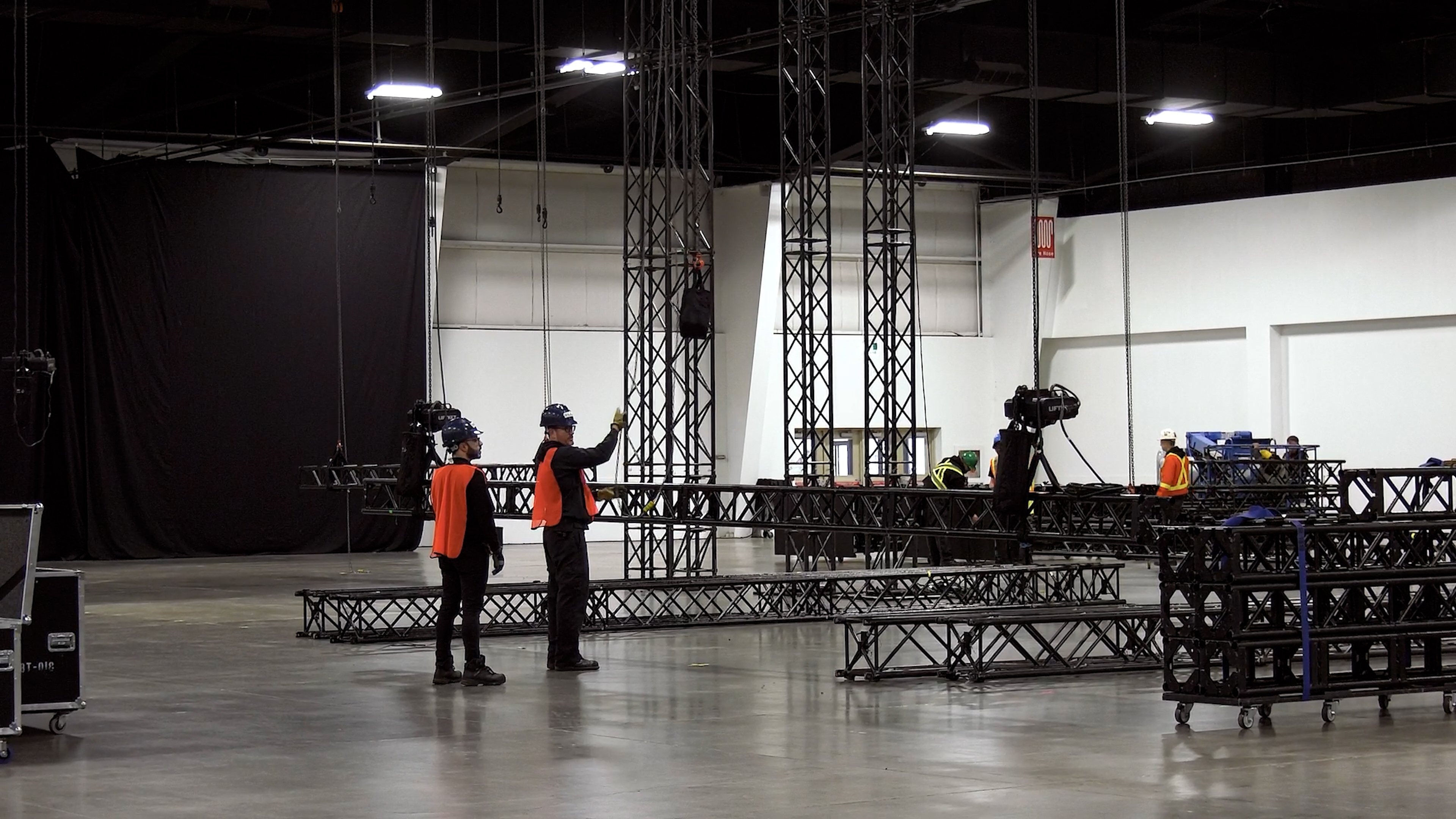
What to Look for in a Canadian AV Production Company
Not all AV production companies are built the same. Some excel at conferences but struggle with product launches. Some have world-class creative capabilities but unreliable crew management. Others are local heroes but can't handle national events. Here's how to separate the competent from the rest.
National Reach vs. Local Expertise
This is a real tension. You want a company that can move equipment and crew across Canada and into the United States if needed, but you also want local knowledge—people who understand your venue, your market, and your client base.
The best Canadian production companies have both:
Headquarters with core creative leadership.
A stable base where design, planning, and strategy happen—where you know the same people will think about your event start to finish.
Standing operations across major Canadian cities.
Toronto, Vancouver, Calgary, Montreal, Ottawa, and beyond—not just fly-in teams, but actual local crew networks and venue relationships.
Relationships with venues and vendors in every region.
Local knowledge without scrambling last-minute contractors.
Equipment ownership across locations.
When a company owns equipment at multiple locations in Canada, they can serve you without shipping costs and delays.
Ask a prospective partner: Where are you based, and where do you actually operate? If they say "We can go anywhere," press further: Where do you have dedicated crew networks? Where do you own equipment? Where are your existing venue relationships? You want standing partnerships and infrastructure, not scrambling and guessing.
bb Blanc is headquartered in Toronto and operates across Canada with dedicated teams in Vancouver, Ottawa, Montreal, Quebec City, New Brunswick, and Prince Edward Island. In the US, we have active operations in California, Las Vegas, Colorado, Florida, and Texas. Our model is straightforward: local resources for equipment and labor, but bb Blanc's creative direction and project management travel with every event. Your show caller in Vancouver operates from the same playbook as your team in Toronto. Your account manager stays consistent. That's the difference between a national company and a company that just claims national reach.
Creative Capabilities (Design, Staging, Content Creation)
Can they design a stage that tells your story? Do they understand composition, sightlines, audience psychology, and how a space reinforces your message? Can they build an original concept—not just execute a spec sheet?
This is where you see the difference between production companies and rental houses. A true production company has creative designers, art directors, and visual strategists on staff. They can show you a portfolio and explain their creative thinking—why they chose certain colors, how staging emphasizes your message, how lighting reinforces narrative moments.
Ask for samples of work similar to what you're planning:
A company that's never designed a product launch shouldn't lead yours.
They lack the specific experience. Ask how they would approach your reveal moment.
One that's designed 40+ annual galas knows how to pace an evening, manage transitions, and create elegant technical moments that don't distract. Look for event-type expertise.
Request case studies, not project lists.
You want to understand their creative approach, their problem-solving process, and how they aligned AV with brand strategy—not just a list of events they've touched.
Ask about in-house creative teams.
Do they have designers, art directors, and content creators on staff, or do they outsource all creative? In-house teams iterate faster and maintain brand consistency.
Technical Depth Across Event Formats
What systems can they actually operate at a professional level? A company strong in lighting might be weak in audio. One that excels at conferences might not have hybrid event experience. This matters.
Your conversation needs to get specific:
LED and display technology.
Can they work with indoor LED walls? Outdoor screens? Projection mapping? Do they understand refresh rates, pixel pitch, and how different displays serve different content?
Audio Design & Management.
Do they design for intelligibility? Can they handle wireless microphones, in-ear monitor mixes for talent, breakout room audio, and audience engagement without feedback or dead zones?
Intelligent Lighting.
Can they design and program moving lights that complement content and talent? Do they understand color theory, timing, and how lighting creates mood and directs attention?
Rigging & Structural Safety.
Can they hang equipment safely? Do they understand load calculations, dual brake motors, and safety factors? (See our guide on hybrid and virtual events for technical standards.)
Streaming and hybrid events.
Can they capture multi-camera feeds, switch between speakers and slides, encode and deliver broadcast-quality streams, and handle redundancy if the internet fails?
Content Management & Control Systems.
Can they run a control room that handles playback, live graphics, real-time audience engagement tools, and on-the-fly changes without crashing?
Track Record with Corporate Clients
References matter—specifically, references from events like yours. Same size, same format, same complexity, same goals.
When you call a reference, ask about execution:
Did the company show up prepared with the right equipment and crew?
Did they handle unexpected problems smoothly without drama?
Was the crew professional, responsive, and aligned with your event's goals?
Did the technology actually work when it mattered?
Did the production partner contribute creative ideas that improved the event?
Would you hire them again?
The best references mention something unexpected: "They solved a problem we didn't anticipate" or "They suggested an approach that made the event better than we imagined" or "The crew was so professional we didn't have to worry about anything during the event."
On-Site Crew and Project Management
An AV production is only as good as the people executing it. This is critical. Ask about crew depth, training, and retention:
How many crew members will be on-site for your specific event, and what are their roles?
Who's the project manager, and do they have final authority to make decisions during your event?
What's their experience level? (You want someone who's managed events your size before and understands corporate event culture.)
What's your contingency plan if a key crew member gets sick 24 hours before the event?
If a piece of equipment fails, what's your immediate workaround? How quickly can you bring in backup gear?
How do you manage communication between the AV crew, other vendors, and the event team during setup and execution?
A good crew manager has seen problems before. They stay calm under pressure. They pivot when something breaks without ever giving the impression that anything went wrong. They communicate clearly with you and your other vendors. They understand the event business, not just the technology.
What clients tell us matters most is the dedicated account manager model—one person from first conversation through post-event, no hand-offs. They value responsiveness; our team is 24/7 available during planning and execution. They value creative input; we don't just execute specs, we ask questions and suggest improvements. And they value show direction—someone with real authority making real-time decisions when live events demand it. The white-glove service approach is built into who we are, not an upsell. Your event gets the same attention whether you're a first-time client or a long-term partner.
How AV Production Works for Different Corporate Event Types
AV requirements vary dramatically by event type. A conference needs something entirely different from a product launch. Understanding these differences helps you ask the right questions and choose a partner with relevant experience.
Conferences and Keynotes
Conferences are about content flow and speaker confidence. You need:
Crystal-clear audio.
Every attendee hears every speaker, every question, every transition.
Readable projection from the back row.
Slides and video content are crisp, legible, and serve the speaker's narrative.
Lighting that frames speakers professionally.
No washed-out faces, no harsh shadows, just confident, compelling presence on stage.
Smooth transitions between sessions.
No awkward pauses while someone fumbles with content. Every transition signals competence and control.
A production company managing a conference should:
1.Design a stage environment that makes speakers feel confident and look professional on camera
2.Develop a content strategy that supports speaker messages and audience engagement
3.Run a control room that handles live switching between speakers, slides, video, and graphics
4.Manage breakout sessions with separate audio zones, projection, and technical support
5.Ensure every attendee can hear and see, regardless of where they sit
6.Create a pace and rhythm that keeps energy up across multiple days and sessions
7.For a deeper dive, read our guide on how to plan audio visual for corporate conferences in Canada.
Product Launches
Product launches are about impact, narrative, and creating an unforgettable reveal moment. You're introducing something new to the world—or at least to your stakeholders—and the AV production needs to make that moment feel significant and exciting. This usually means:
Custom content designed for the moment.
Videos, animations, motion graphics, and sound design all built specifically for this product and this reveal. A generic intro video doesn't create the impact you need.
Dramatic, precise lighting.
Color, intensity, and movement that build tension, focus attention on the product, and celebrate the moment. Lighting design that's choreographed to the content and reveal timing.
Precise staging and choreography.
How does the product enter the stage? When do the lights shift? What's the sound design? Where do speakers stand? Every moment is designed with intention.
Technical redundancy at every critical point.
A failed playback or missed lighting cue is not an option. You need backup systems, backup content, and crews ready to pivot if something fails.
Show calling and real-time direction.
Someone in the control room is managing timing, cueing crew, responding to talent, and keeping the entire production synchronized.
The reveal moment is everything. A production company managing a launch designs that moment with precision and redundancy at every critical point. They work backward from the reveal moment, building the narrative arc and technical infrastructure that makes it work.
Launches often need custom content creation, which extends your timeline. Plan for at least 4–6 weeks of production planning, creative development, and content production before your launch date.
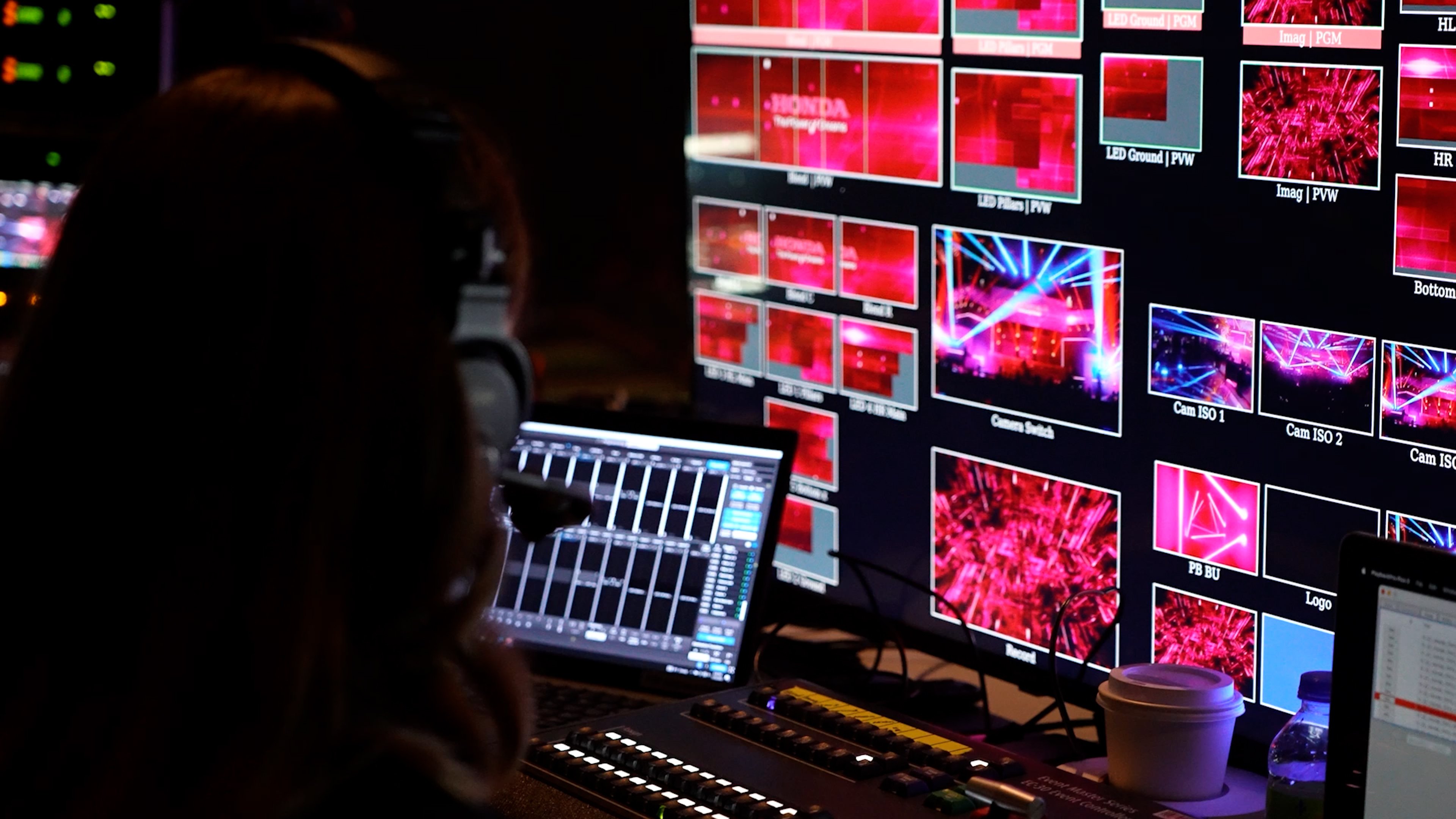
Take the Honda Holiday Party production—a large-scale gala where we created custom staging renders showing the full creative vision before the client committed. Then we executed with multiple LED screen configurations, intelligent lighting with atmospheric color shifts, and multi-camera video production for live and recorded content. The render-to-reality approach meant the client knew exactly what they'd get. No surprises. The staging renders became the north star for every creative decision during production—and that clarity is why the execution landed flawlessly.
For more ideas, see our article on product launch events using AV to wow your audience.
Galas and Awards Shows
Galas need elegance, pacing, and precision. Awards shows add complexity and live unpredictability:
Live teleprompters.
So speakers stay on timing and hit their key messages.
Real-time graphics and lower-thirds.
Scoreboards, sponsor mentions, award categories, and visual branding that updates instantly.
Multiple cameras for live broadcast and B-roll.
Content you can use for post-event comms, social media, and internal celebration.
Mood lighting that changes with the event pace.
Different lighting for awards ceremonies vs. entertainment vs. dancing vs. sponsor recognition moments.
Polished transitions.
A slow transition feels like an eternity on stage. A graphic that doesn't load throws off your pacing and cheapens the moment.
Real-time sound mixing for live entertainment.
If you have performers, you need a mixer who responds to the performance in real-time.
You need a crew that's done this format before. These events are less forgiving of mistakes. There's no pause button, no second take. The production needs to feel invisible to the audience—smooth, professional, and completely under control.
Trade Shows and Exhibitions
Trade shows and exhibitions are about competition and engagement. Your booth or presence needs to stand out in a crowded environment, draw traffic, communicate your message, and engage attendees. AV is often the key differentiator:
Resilient, looping content.
Content that runs reliably for hours without rebooting or crashing. If your LED wall needs to come down, you recover fast.
Brightness and visibility.
Your displays need to compete in a bright convention hall. Not all screens are bright enough for trade show environments.
Interactive elements and engagement.
Touchscreens, motion sensors, live polling, QR code integration, or other interactive features that invite people to engage with your brand.
Technical support on-site during the show.
Someone available to troubleshoot, update content, and respond to issues during show hours.
For tactical ideas, see our guide on LED booths and trade show AV in Canada.
Hybrid and Virtual Events
Hybrid events serve both in-person and remote audiences simultaneously. This adds significant complexity:
Broadcast-quality camera work.
Multiple angles, smooth real-time switching, lighting designed for both in-person and on-camera presence.
Real-time streaming infrastructure.
No delay, no buffer, no dropped frames. Redundant internet, redundant encoding, backup systems if the primary stream fails.
Separate A/V design for the remote experience.
The remote audience needs their own audio mix, graphics, and engagement strategy. They shouldn't feel like second-class attendees.
Orchestration of both audiences.
The in-person experience and remote experience need equal production value and equal creative attention. If you're doing a hybrid event, don't shortchange the remote audience.
Real-time engagement tools.
Q&A, live polling, chat moderation, and virtual networking tools that connect both audiences.
The best production companies design for both audiences equally, with neither treated as an afterthought. Not all AV companies are equally skilled at hybrid work. Some are strong in live events but weak in streaming. Some understand broadcast but have never managed live venues. You need a partner who excels at both. Learn more about hybrid and virtual event capabilities.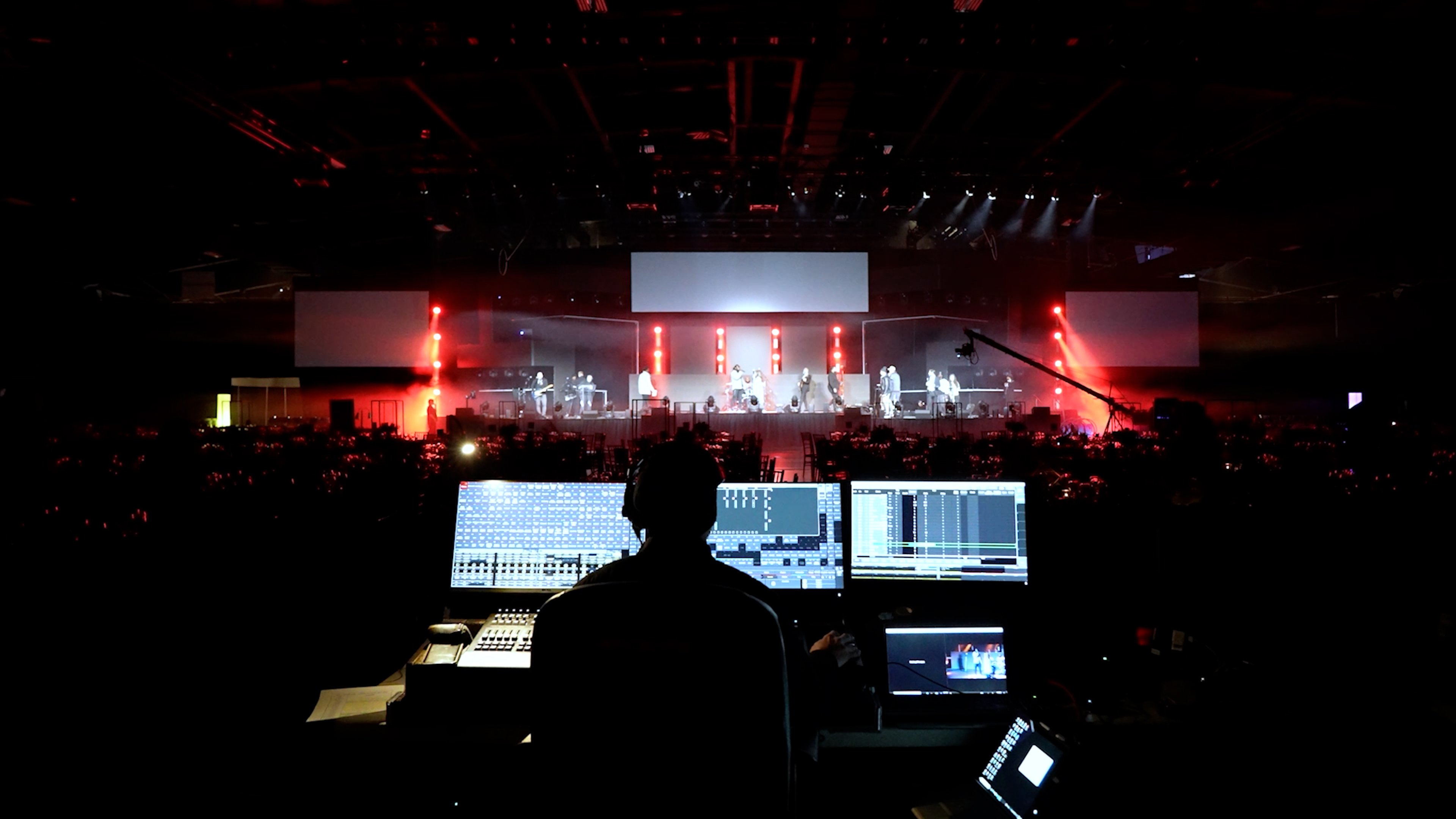
What Drives AV Production Value in Canada
AV production pricing in Canada ranges widely, and there's no standard rate card. But rather than thinking about what "costs," it's more useful to think about what drives value
Understanding Production Value
When you work with a true production company, you're not paying for equipment hours and crew shifts. You're paying for strategic thinking, creative design, experience, problem-solving capability, and accountability.
Here's what actually drives value in an AV production partnership:
Strategic creative leadership.
A company with in-house designers and creative strategists who can design an original concept aligned with your brand and goals. This is the most important value driver. A generic stage and standard equipment from a rental house looks the same at every event. Custom creative design that tells your story is irreplaceable.
Experience with your event type.
A company that's managed product launches, conferences, galas, or trade shows similar to yours understands the specific challenges and opportunities. This experience saves problems and creates better outcomes.
Dedicated project management and accountability.
One person responsible for your entire production from discovery to post-event. Someone with decision-making authority and skin in the game. This eliminates finger-pointing and ensures someone is always thinking about your event.
Crew depth and stability.
A company with standing crew networks and trained professionals on retainer. When you hire a production company with rotating contractors and freelancers assembled at the last minute, you're taking on risk. Trained, dedicated crews deliver better results.
Equipment ownership and infrastructure.
Companies that own equipment and have production facilities can serve you faster, more reliably, and with better contingency planning. They're not renting from other vendors. Their equipment is maintained to their standards.
In-house technical capabilities.
Streaming, content creation, lighting design, audio engineering, rigging—the more capabilities a company has in-house, the better integrated your production will be. You don't lose creative intent in hand-offs to external vendors.
Problem-solving and contingency planning.
Experience managing unexpected situations, having backup equipment, having redundant systems, and the creative thinking to pivot when something doesn't go as planned.
Client partnership vs. transaction.
Whether they treat you as a partner worth understanding deeply, or as a job to execute and move on from.
How to Maximize Value from Your Production Budget
Start by being clear about your priorities and what actually matters:
Invest in creative design.
Often this is the highest-leverage investment. A brilliant concept with good execution beats expensive equipment with mediocre ideas. If you have a limited budget, invest in creative strategy first.
Invest in technical reliability and redundancy.
This prevents disasters. You can't put a price on the peace of mind that comes from knowing every critical element has a backup plan.
Prioritize crew and project management.
You want experienced people in charge, not junior staff learning on your event.
Ask about tiered approaches and flexible scope.
Can you start with core systems and add elements? Can you hire crew for key moments and reduce coverage elsewhere? Good partners help you allocate budget where it matters most.
Don't commoditize AV separately from the rest of your event.
The cheapest AV company isn't the best value. If they cut corners on crew training, contingency planning, or creative thinking, you'll pay for it in stress and risk during your event. You want a partner you trust, not the lowest bid.
Budget for timeline.
If you're asking for custom content, design work, and creative strategy, give yourself adequate time for planning. Rushing a creative process costs more and yields worse results.
Work with your production partner early and honestly about your budget, timeline, and priorities. A good partner will help you allocate resources where they create the most value.
Red Flags When Hiring an AV Production Company
Watch for these warning signs when evaluating partners:
No Site Visit Before Quoting.
A production company that quotes your event without visiting the venue hasn't done their homework. They don't know the sight lines, the power infrastructure, the rigging points, the acoustics, or the technical limitations. They're guessing. Never work with someone who quotes based on a floor plan alone.
Quoting Without Understanding Your Goals.
If they're listing equipment without asking about your objectives, your audience, what you're trying to accomplish, or what matters to your brand, they're not thinking strategically. They're just filling a spec sheet. Production starts with understanding why, not with selecting what.
No In-House Creative Team.
A company that can only execute specs but has no in-house designers, art directors, or content creators is a rental house pretending to be a production company. They can implement your ideas, but they can't originate ideas. They can't design a stage, develop a creative concept, or think strategically about visual storytelling. If creative development isn't part of their offering, they're not a true production partner.
No Creative Involvement in the Event.
A company that shows up with equipment and leaves after setup isn't a partner. You need someone thinking about how your stage looks, how content flows, how speakers feel, and how the audience experiences the event. You need creative thinking, not just technical operations.
No Dedicated Project Manager.
Who's responsible if something goes wrong? If the answer is "different people on different days," you're in trouble. Your project manager should be the same person from discovery through post-event, and they should have final decision-making authority and the power to solve problems during your event.
No References or Evasive References.
If they won't give you references from similar events, move on. If they give you references who are reluctant to recommend them, that's a red flag. Evasiveness is always a red flag.
Underbidding to Win the Business.
If a quote seems too low, it probably is. Either they're cutting corners on crew training, contingency planning, or creative thinking, or they've fundamentally misunderstood the scope. You'll pay for the savings in stress during your event.
No Contingency Planning.
Ask: What happens if equipment fails? What if a key crew member gets sick 24 hours before your event? What if the internet goes down during your hybrid event? If they don't have clear, detailed answers, they're not ready for the real world.
Partner with bb Blanc for AV Production Across Canada
Choosing an AV production partner is one of the most important decisions you'll make for a corporate event. It's where you celebrate your people, showcase your products, connect with stakeholders, and reinforce your brand. The AV production needs to reflect that importance.
Since 2008, bb Blanc has been one of Canada's leading independently owned creative production companies, delivering live, hybrid, and virtual experiences across Canada and the United States through strategic creative design, technical excellence, and unwavering client-first service. Our philosophy is simple: The Experience is Everything.
With 15+ years of production expertise, a team of 82 professionals and 200+ freelancers, and a 45,000 sq ft production facility with full in-house equipment ownership, we bring the creative depth and technical infrastructure that corporate events demand. Our in-house creative and technical teams work together from concept through execution—designing original, brand-aligned experiences and managing every technical detail to ensure they come to life.
We operate across Canada with dedicated teams, equipment, and venue relationships in Toronto (headquarters), Vancouver, Calgary, Montreal, Ottawa, and beyond. We also serve major U.S. markets including California, Las Vegas, Colorado, Florida, and Texas—so whether your event is in Canada or requires cross-border execution, we have the infrastructure and experience to deliver.
From conferences and trade shows to galas, product launches, executive programs, awards shows, and large-scale productions for audiences of 5,000+, we deliver consistent creative quality and technical excellence. Our Studio 41—a 896 sq ft broadcast and content production facility—supports content creation, hybrid productions, and live streaming from concept to delivery.
Your dedicated account manager owns the entire project timeline from initial discovery through post-event strategy. We bring strategic creative thinking to every event, not just technical operations. And with over 99% client satisfaction across more than 500 corporate events in Canada and beyond, our track record demonstrates our commitment to partnership and excellence.
Ready to start planning your next corporate event in Canada? Contact our team today.
Frequently Asked Questions

