



You're planning a 500-person product launch in two months. Your venue is locked. Your speakers are confirmed. And suddenly you realize: you haven't actually talked to anyone about how the experience will come to life—what the stage will look like, how your brand will feel in the room, what story the visuals and audio will tell.
This is where most corporate planners feel the first wave of panic.
Toronto's audio visual vendor landscape is fragmented. You've got rental houses that show up with boxes of gear. You've got integrators who spec systems for buildings. You've got full-service creative audio visual production companies. And they all talk about solving your event's creative challenge in different ways, which makes comparison nearly impossible.
This guide is for the Toronto corporate event planner who wants to cut through that noise and find an actual audio visual production partner—someone who understands your venue, your audience, your goals, and the specific creative challenge of pulling off a professional event in Toronto. Not just someone who operates equipment. Someone who designs experiences.
Understanding Toronto's Audio Visual Vendor Landscape
Toronto's audio visual market is mature and competitive. For corporate event planners seeking production solutions, you have options. That's good and bad.
The good: genuine expertise exists. Production companies here work constantly—corporate conferences, product launches, galas, awards shows, large-scale corporate celebrations. AV specialists have worked in every major venue in the city and know the specific creative and technical realities of each space.
The bad: you can also hire someone who rents you a projector and calls it a day. The market doesn't self-police. You have to understand what you're actually hiring.
Three Types of Vendors and What They Actually Do
Vendors in this space fall into three distinct categories. The key difference isn't the equipment they own—it's the relationship model and what they're accountable for.
Rental houses focus on equipment inventory. They own speakers, projectors, LED screens, microphones, and cameras and rent them by the day. A technician or two sets up the gear and operates it during your event. Rental makes sense for straightforward technical needs with minimal creative direction. You know what you want, the rental house delivers equipment and technical operators. The limitation: they're not invested in your event's creative outcome. They're moving inventory. When something unexpected happens—a speaker goes off-script, you need a problem solved on the fly, your audience reaction suggests you need to adjust the pace or visual strategy—the operator isn't empowered to think creatively. They run the system you specified.
Integrators design and install permanent systems into buildings, boardrooms, studios, conference rooms, and control rooms. They're infrastructure experts. They excel at long-term solutions and system design. They're less comfortable with one-off events. They build systems that live in buildings. That's different from creating experiences for temporary productions.
Full-service creative production companies treat your event as a creative project. They handle not just audio, video, lighting, and staging—they handle design, strategy, content creation, show direction, and technical execution. A production company is invested in the outcome because their reputation depends on your event being remarkable. This means they're thinking about: How should this stage look? What story does the lighting tell? Is the video reinforcing your message? How do we use live cameras to create connection? Where's the creative problem hiding? They manage logistics, coordinate with venues, solve problems in real-time, and bring creative perspective. They cost more, but they own the result.
For corporate events, the full-service model makes sense. Corporate productions have moving pieces. A keynote runs long. A video file gets corrupted. A speaker goes off-script and needs a live camera follow. Audience energy dips and you need an unplanned music moment. You need professionals in the room who are paid to solve these problems, and who have the creative and technical authority to do so.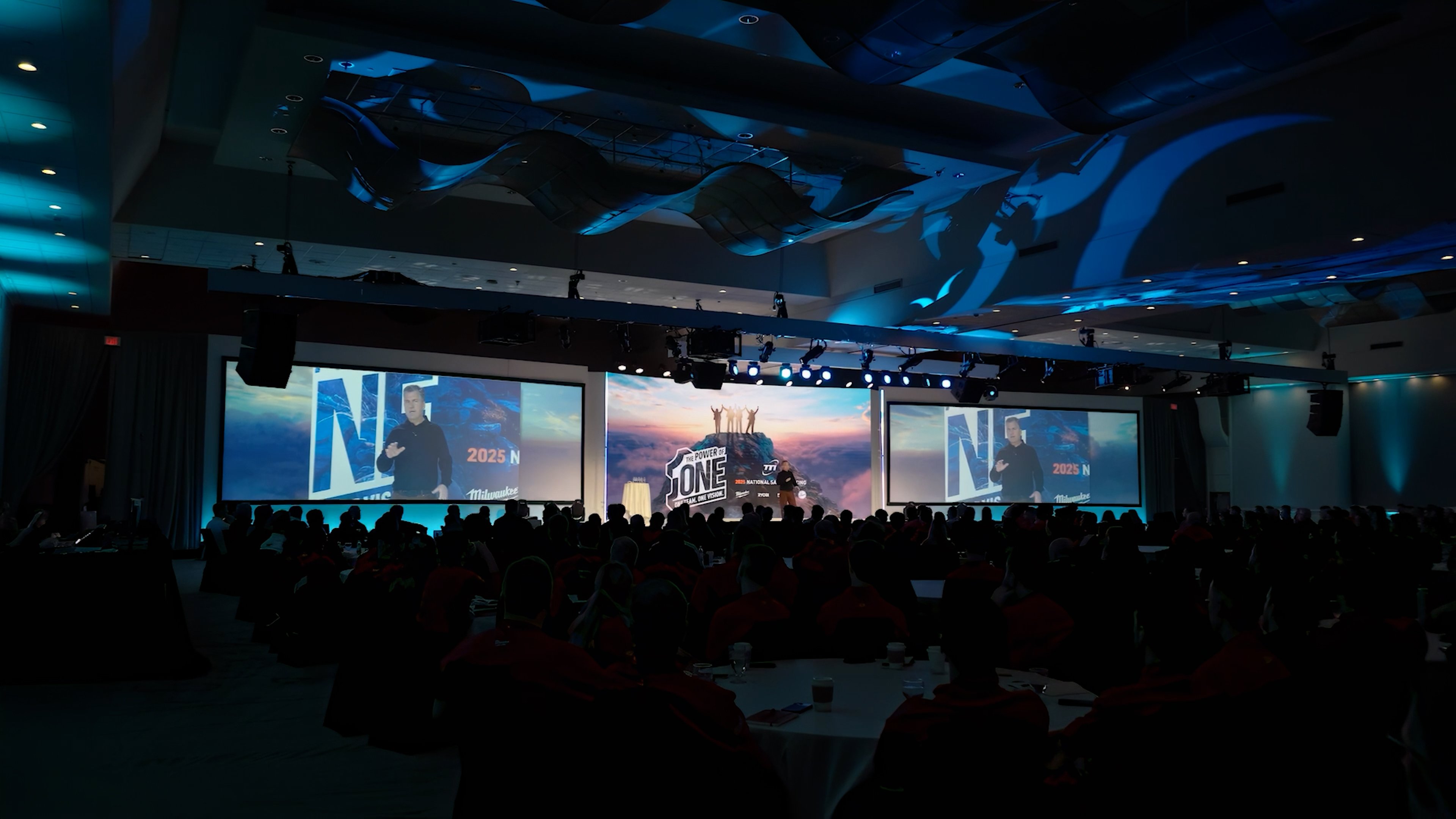
Toronto-Specific Considerations
Working with production partners here means understanding local constraints and opportunities unique to the city. Production planners must factor in specific logistics and union considerations.
Union rules matter significantly in Toronto. The city has strong union regulations around load-in, labor, and rigging. Most large venues—the Metro Toronto Convention Centre, Beanfield Centre, major hotel ballrooms—require union stagehands for setup, breakdown, and crew work. This means your production partner has to know how to coordinate with union crews, manage call times, navigate union rates, and work within union protocols. A vendor unfamiliar with local union requirements will either shock you with unexpected costs or underestimate the complexity of your event timeline.
Venue knowledge directly affects production execution. Many iconic spaces—the Fairmont Royal York, Shangri-La, the Carlu, Evergreen Brick Works—have narrow load-in routes, restricted load-in windows, ceiling height limitations that affect rigging and screen placement, power distribution challenges, and unique acoustic properties. A production company that's worked extensively in these venues knows these constraints and how to design around them creatively. One that hasn't will propose solutions that don't work, and you'll discover this three weeks before your event when it's too late to redesign.
We've been based in Toronto since 2008—almost two decades of deep market expertise. Our 45,000 sq ft facility means every piece of equipment is owned, maintained in-house, certified to manufacturer specs, and available when we need it. We've executed over 600 corporate events in the past two years alone. Your dedicated account manager has personally worked in your venue, knows its constraints and opportunities, and carries that knowledge with you from concept through execution. That continuity prevents late-stage surprises. When your manager walks into a hotel ballroom with you, they're not seeing it for the first time.
Core Audio Visual Services: What a Creative Production Partner Delivers
Production encompasses many disciplines. When you're evaluating audio visual companies in Toronto, you need to understand what services actually comprise a creative production approach—not just what equipment they operate.
Creative Design and Brand Strategy
Before a single projector is rented or LED wall purchased, a production company should be designing your experience. This means understanding your event's purpose, your brand's visual identity, your audience expectations, and the emotional arc you want to create.
Creative design includes:
Staging and set design:What does the stage look like? How do you create visual hierarchy and focus? What scenic elements, risers, draping, or custom pieces support your brand and story?
Visual rendering:Before you commit to a concept, does your partner show you what it will look like? Professional companies provide staging renders—visual mockups that show how the lighting, screens, and staging work together in your specific venue.
Color and brand alignment:Does the experience reinforce your brand? Lighting color, video graphics, scenic elements—they should all feel intentional and on-brand.
Spatial design:How does the setup work with your venue's constraints? A good partner identifies creative solutions to challenging spaces.
This is what separates a creative audio visual production company from a rental house. The rental house asks "What equipment do you want?" The production company asks "What experience do you want to create, and how can design serve that?"
Content Strategy and Production
Many corporate events lack cohesive visual content. You get slides, maybe a walk-in video, perhaps sponsor graphics—all disconnected. A creative production company brings content strategy.
This includes:
Video content creation:Walk-in videos, segment introductions, case study videos, celebration videos, speaker intros. Professional-quality video that feels aligned with your event's tone.
Graphics and motion design:Animated lower-thirds, branded bumpers, data visualization, animated transitions. Graphics that don't feel generic or borrowed.
Presentation design and content support:Slide design that supports your speakers, not distracts them. Speaker coaching on what the slides should be doing during presentation.
Live video direction:If you're capturing the event—keynote speakers, audience moments, live interviews—how is that being shot, switched, and displayed? A professional video director plans shots, manages multiple cameras, and creates a coherent video narrative.
Content strategy means every visual element supports your message. That's a creative service, not an equipment service.
Show Direction and Technical Management
This is the often-invisible expertise that separates exceptional events from chaotic ones.
Show direction and technical management includes:
Show calling and real-time execution:During your event, someone is managing every lighting cue, video trigger, music moment, and transition. They're watching the energy in the room and adjusting in real-time. If a speaker is late, the show caller keeps the program moving. If audience energy dips, they can speed up a transition or bring in music. This isn't operating equipment. This is directing the show.
Rehearsal and speaker preparation:Before the event, the team rehearses with your speakers. This catches issues—the speaker stands where the camera can't see them, the presenter reads from their slides instead of making eye contact, the video plays at the wrong time. Rehearsal prevents disasters.
Contingency planning:What happens when a speaker's laptop doesn't connect? When a video file is corrupted? When a microphone fails? A professional team has backup systems, workarounds, and the authority to execute them without your intervention.
Crew coordination and technical leadership:For larger events, the team manages the technical crew—lighting technicians, audio operators, camera operators, video switchers. Someone owns the technical vision and ensures everyone is executing the same plan.
Show direction is where production expertise becomes about management and leadership, not just technical operation.
Sound Design
Audio is the first thing to get right because it's the first thing your audience will judge if it's wrong.
Professional sound design means:
Audio strategy for your space:Not just "we need speakers." Rather: how do we deliver consistent, clear audio to every seat in this room? What's the venue's acoustic behavior? Where are the dead zones? How much sound is too much? A production company measures acoustics and designs for clarity.
Microphone strategy:Handheld mics for speakers, lavalier mics for interviews, podium mics for formal presentations, headset mics for roving presenters, backup systems for redundancy. The choice depends on your program and your speaker comfort.
Live mixing and audio processing:An experienced technician manages levels, applies EQ to make voices clear, routes signals, and responds to live performance. A speaker gets quiet and the tech rides the fader. A feedback loop starts and the tech kills it. This is professional sound design.
Speech intelligibility:Can your audience hear and understand every word? A professional company designs for clarity. A rental operator just checks that the speaker works.
Visual Design and Lighting Strategy
Lighting is not an afterthought. It's a creative tool that shapes the entire experience.
Professional lighting design for events includes:
Stage lighting and visibility:Spotlights and wash lights that illuminate presenters evenly and make them visible to cameras and the back of the room.
Atmospheric lighting:Sets the tone and energy. Cool blue lighting feels different than warm amber. Strategic lighting supports your emotional narrative.
Architectural lighting:Uplighting on walls, accent lighting on scenic elements, highlighting the venue itself. This transforms a plain ballroom into an intentional space.
Branded lighting effects:Gobo projection (logos and patterns projected onto surfaces), color matching your brand palette, custom lighting effects that reinforce your message.
Lighting cues and timing:Lighting that changes with the mood of your program. A serious keynote gets different lighting than a celebration moment. A professional lighting designer choreographs these transitions.
Visual Display: Projection and LED Strategy
Video serves multiple functions in corporate events: presenting information, magnifying speakers for distant audiences (IMAG—image magnification), displaying sponsor content, and creating visual atmosphere.
Professional display strategy includes:
Display technology selection:Projection works beautifully in darker spaces but fades in bright rooms. LED walls produce their own light and work in any lighting condition. They're brighter, have better color and contrast, and command attention. The choice depends on your room, your content, your message hierarchy, and your design goals. A professional company recommends based on your specific situation, not based on inventory.
IMAG (image magnification) and live camera work:Live cameras capturing speakers create connection and intimacy in large rooms. But IMAG requires a skilled camera operator and real-time video switching. Poor IMAG is distracting. Professional IMAG creates connection.
Content display strategy:How are you using screens? Is each screen serving a purpose, or just displaying something? Are graphics supporting your narrative or competing with it?
Staging and Scenic Design
Staging is the physical infrastructure—risers, podiums, lecterns, stairs, custom scenic elements, draping. This determines height, depth, sightlines, and whether your event feels professional and intentional.
A professional stage communicates authority and purpose. A makeshift setup signals that your event didn't warrant proper planning. In Toronto, professional staging might mean working with union labor and learning the specific rigging capabilities and limitations of your venue—something a full-service partner handles.
Streaming and Hybrid Production
If your event has virtual attendees or needs to be recorded for future viewing, streaming is part of your strategy. For hybrid and virtual events, where some people are in the room and others online, the complexity increases significantly. They require multiple camera angles, professional-quality audio capture, encoder and streaming platform management, and real-time monitoring of the stream.
A production company managing your hybrid event owns the experience for both in-person and virtual audiences. That's a creative and technical responsibility, not just "we'll point a camera at the stage and stream it."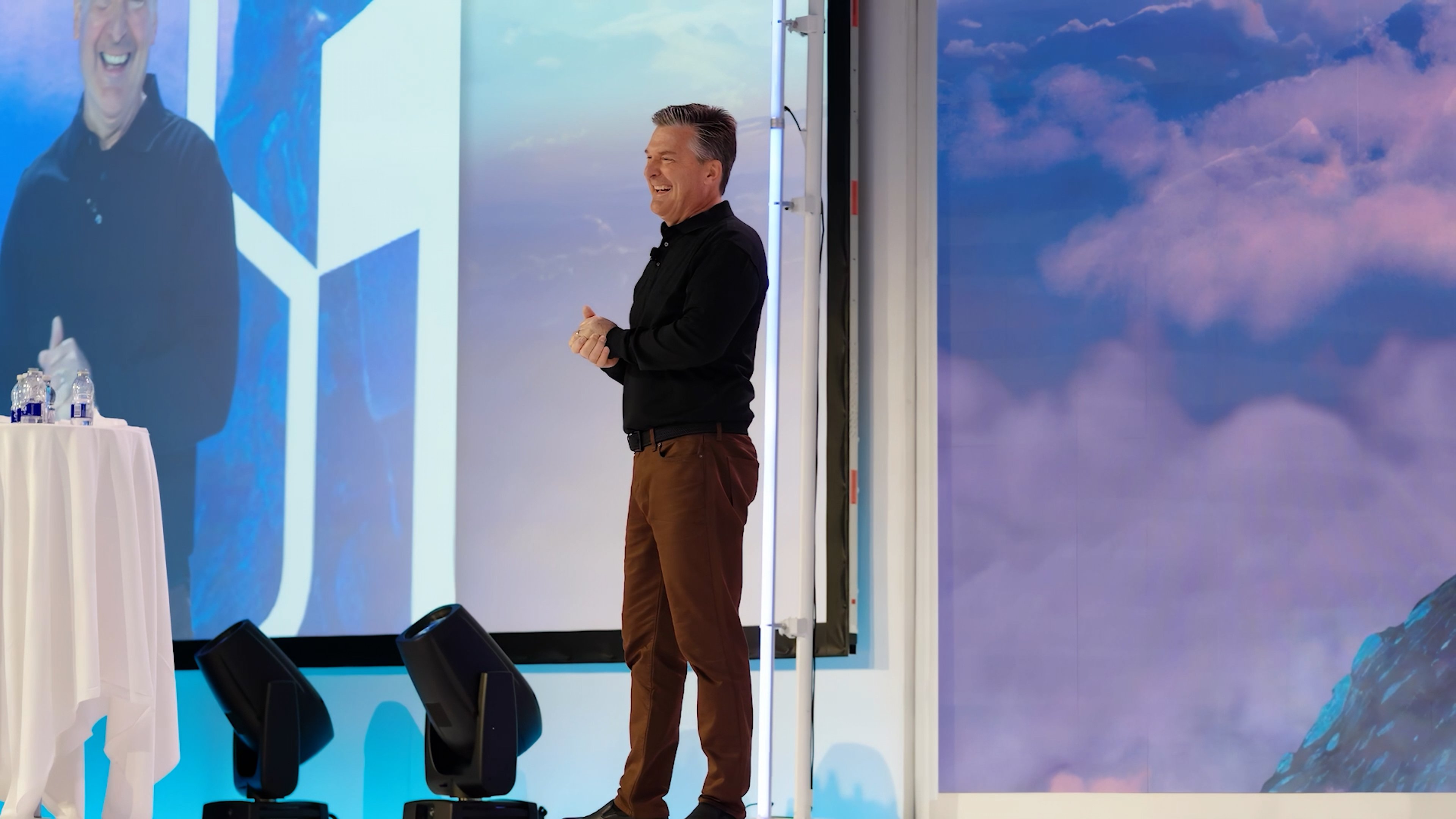
How to Evaluate Audio Visual Companies in Toronto
A quote is just a list of equipment and labor rates. It doesn't tell you if the audio visual vendor understands your needs, can solve problems, or will deliver something that impresses your audience. When choosing among audio visual companies in Toronto, you need deeper criteria.
Ask About Process, Not Just Equipment
The wrong question: "What speakers do you have? What size LED wall options?"
The right question: "How do you evaluate what technology and design this room and event actually need?"
A good production company will ask you questions. About your event's purpose, your audience, your program, your goals, your brand identity. They'll probe your venue's constraints and opportunities. They'll propose a solution based on analysis and creative thinking, not just what's in their inventory.
During a conversation with a vendor, listen for:
Are they asking questions about your event before suggesting solutions?
Do they explain their recommendations and the reasoning behind them?
Do they acknowledge constraints in your venue and describe how they'd solve them creatively?
Are they talking about your event's experience, or just about equipment specifications?
Look for In-House Creative Capability
Table stakes: any competent vendor can project your slides and mic your speaker.
What distinguishes a partner is in-house creative thinking. Can they help you shape the experience? Can they suggest a camera angle that makes your keynote more compelling? Can they design lighting that reinforces your message? Can they create custom content that resonates?
Specifically, ask vendors:
Do you have in-house creative and design teams? (Video producers, graphic designers, lighting designers, creative directors?)
Can you show me staging renders before I commit?
Have you created original video content for similar events?
Do you have a show director on-site who can make real-time creative decisions?
What clients report is seeing the staging renders and thinking, "That's exactly what I imagined—actually, it's better." Having video producers, lighting designers, show directors, and production managers all in-house means the creative vision stays clean from concept through execution. No telephone game between separate vendors. When your lighting designer talks to your video producer, they're in the same room and talking the same language. That integrated thinking shows up in your event—a cohesive flow where every element reinforces your message, not fights against it.
Listen for vendors who talk about past work they're proud of. Not their most expensive project—their best. What were they proud of? Why? Listen for examples where design solved a creative challenge, not just a technical one.
Verify Dedicated Account Management and Continuity
For corporate events, you don't want your project passing between different people. You want a single owner.
Ask vendors:
Will I have a dedicated account manager from concept through execution?
Will that person attend my venue walkthrough and initial planning calls?
Will the same person be on-site during my event, or will they hand off to someone else?
What's the communication model if I need something last-minute?
A full-service partner should assign one person who owns your entire timeline and is your single point of contact. No hand-offs. No surprises. That's not standard in rental houses. That's a creative production company differentiator.
Ask About Corporate Audio Visual Experience in Toronto
A vendor who specializes in nightclub events has different expertise than one who specializes in corporate conferences and galas.
Ask specifically about corporate experience:
How many corporate events do you execute per year?
What's your guest count range for events?
What event types? (Product launches, conferences, galas, awards shows, corporate celebrations)
Can you share project references?
Specialists in corporate events outperform generalists. If a vendor says "we can do any event," ask them to prove it with corporate references.
Conduct a Venue Walkthrough with Your Partner
Before you commit to a vendor, bring your partner to your venue. Walk the space together. Point out:
Where's the stage? Where's the audience?
What are ceiling heights and rigging points?
Where is power? Where are the technical limitations?
What are load-in constraints and timing windows?
Are there union requirements for setup?
A vendor who's worked in your specific venue will point out constraints and creative opportunities you haven't noticed. This conversation reveals whether they've worked in similar spaces and understand local realities.
For example: "The Royal York ballrooms have low ceilings, which limits rigging. But they have great sightlines. So we might suggest a wide, shallow stage rather than a tall riser setup. And their power is concentrated in two locations, so we'd design our distribution carefully."
That's the conversation that matters.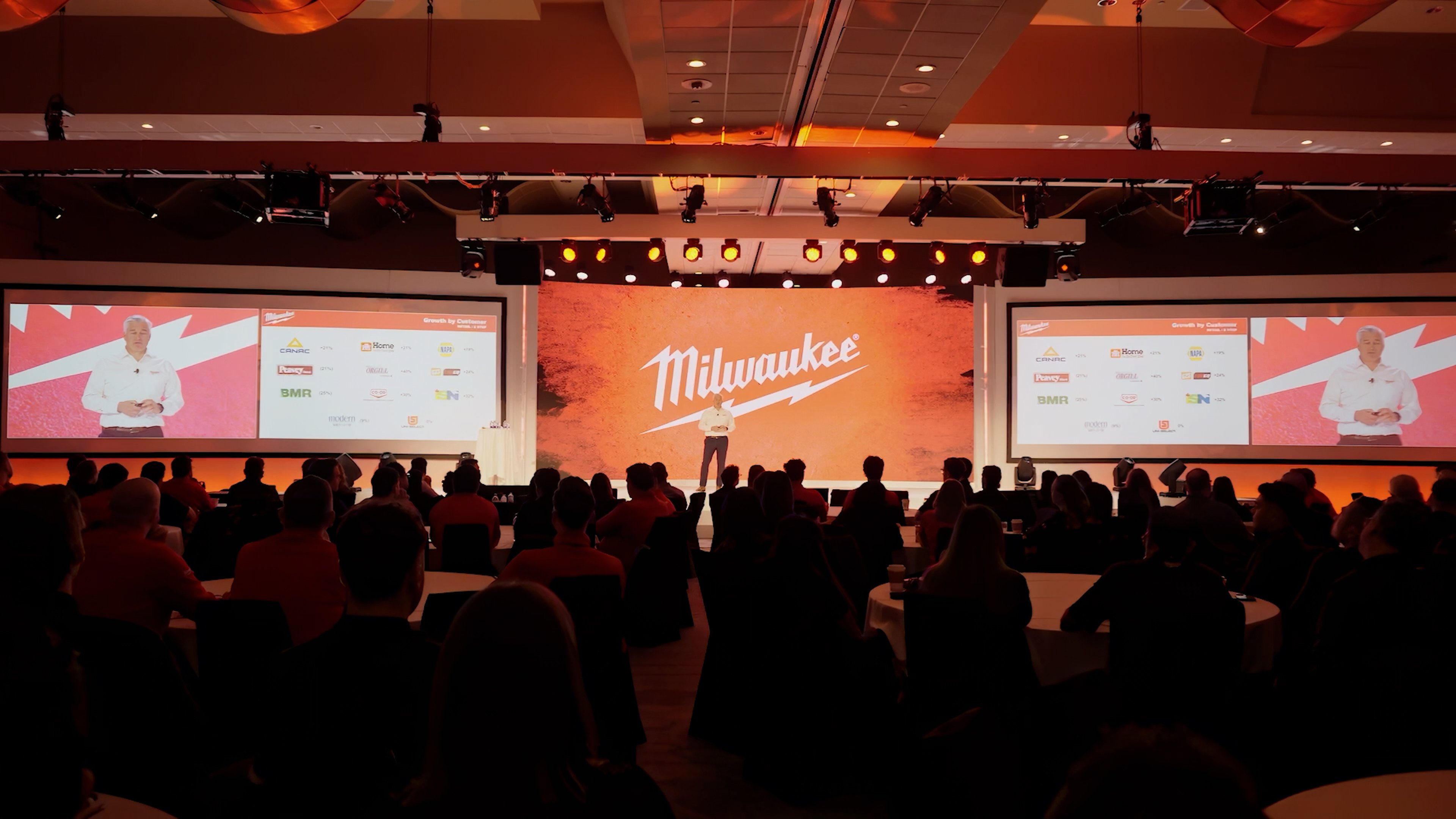
Understand What's Included in Your Quote
Scope creep and surprise invoices happen because of assumptions. Be specific.
Ask your vendor:
Is design and creative strategy included, or separate?
How many technicians and for how long?
Does setup include rehearsal time with my speakers?
Are contingency systems built in?
Is content creation (video, graphics) included or separate?
Is streaming included if I need it?
What happens if I need to make changes?
Ask your vendor to write everything down. Get it in the proposal. Assumptions create invoices. Clarity creates partnership.
Here are three questions every Toronto event planner should ask a production company: 1. "Can you show me a staging render of my event before I commit?" This tests whether they have in-house creative capability and whether they think in design, not just equipment specs. 2. "Who will be my single point of contact from planning through execution day?" This tests whether they operate as a partner with continuity or as a service provider handing you between different people. 3. "What happens when something goes wrong during my live event—who has the authority to make real-time decisions?" This tests whether they have professional show direction built in, whether they understand the stakes of a live event, and whether your success matters to them or it's just another gig.
Toronto Venues and Audio Visual Realities
Your Toronto venue shapes your audio visual strategy, design approach, and technical execution. Here's how an experienced production company approaches planning for the city's major corporate event spaces.
Metro Toronto Convention Centre (MTCC)
MTCC is Toronto's largest convention venue with high ceilings, abundant power, and existing rigging infrastructure. The scale is substantial.
Union labor is mandatory at MTCC for load-in and rigging. Your production partner needs deep Toronto union experience. MTCC has in-house capability, but most corporate events hire outside vendors for specialized creative needs or greater control over design.
From a creative perspective: MTCC's size and flexibility mean you can design large-scale experiences. Think multiple screens, complex lighting rigs, sophisticated staging. But its scale also means you need strong show direction and technical management to coordinate everything.
Key considerations:
Union crew coordination, high-specification equipment, multi-room management, complex load-in and timing windows, large-scale technical production.
Beanfield Centre and Enercare Centre: Exhibition Spaces
These exhibition and trade show spaces have large open floors, high ceilings, and modular infrastructure. Events here are typically different from theater-style corporate productions.
Trade shows usually mean booth video displays, interactive visual displays, directional audio in open spaces, and digital wayfinding. The technical challenge is distributing systems across open space without audio bleed into neighboring areas.
From a creative perspective: trade shows are about drawing crowds and communicating product benefits quickly. Your production should be eye-catching and narrative-driven, not just ambient.
Key considerations:
Trade-specific strategies, distributed setup, multiple simultaneous deployments, managing audio bleed in open space.
Hotel Ballrooms: The Workhorse Venues
Hotel ballrooms—the Fairmont Royal York, Shangri-La, Four Seasons—are Toronto's primary corporate event venues. They accommodate 100 to 600 people, offer good sightlines, and have reliable power. They're where most corporate galas, product launches, and conferences happen.
Load-in is always tight. Restricted times, often early morning. Ceiling heights vary, affecting rigging and projection placement. In-house systems are usually basic—a projector, perhaps a couple of wireless mics. If you want anything beyond standard setup, you're bringing in outside support.
From a creative perspective: hotel ballrooms are constrained but familiar to production companies working in the city. A good vendor knows each hotel's specific quirks and has creative solutions. Low ceiling? They design lighting that creates height and drama. Tight load-in window? They've timed these setups over 100 events and can execute flawlessly.
Key considerations:
Tight load-in windows, restricted rigging, ceiling height variations, basic in-house systems, established relationships with hotel technical teams.
Unique and Character Venues: Challenging Spaces
Toronto has character venues—Evergreen Brick Works (industrial), Steam Whistle (brewery), the Carlu (historic theater). They photograph beautifully and feel different than traditional hotel or convention space. They also come with significant production constraints.
Narrow load-in routes affect delivery. Limited or unpredictable power impacts equipment placement. Rigging that's either impossible or requires custom solutions. Unpredictable acoustics. But also: incredible visual authenticity and atmosphere.
From a creative perspective: these venues demand companies who specialize in designing within constraints. A good partner at Evergreen Brick Works isn't fighting the industrial aesthetic—they're amplifying it through design. They're using the space's character as part of the production.
For creative stage decoration and design at challenging venues, experience matters tremendously. The vendor needs to have solved these problems before.
Key considerations:
Logistics creativity, acoustic design, custom power solutions, aesthetic alignment with venue character, architectural constraints as creative opportunities.
Building Your Audio Visual Strategy
Not every event needs the same scope of production. The key is matching your investment to the stakes of the event and your creative ambitions.
When Straightforward Support Fits
Internal meetings, smaller team gatherings, or events in venues with strong built-in infrastructure may only need a technician and standard equipment. If your program is straightforward—one speaker, one screen, basic audio—a lighter setup works. This is where a rental house can be cost-effective.
When You Need Full-Service Production
For corporate conferences, product launches, and large-scale corporate events, you need a partner who owns the outcome.
Full-service production is right when:
1. Multiple speakers with different presentation styles and tech needs
2. Live video, custom content creation, or hybrid streaming
3. Custom lighting design that reinforces your message
4. Staging or scenic elements that require design and coordination
5. Extended event duration with multiple program segments
6. High stakes—executives, important clients, significant company moments
The difference between basic and full-service isn't just equipment. It's accountability and creative partnership. When something goes wrong—and live events always have surprises—a full-service partner has the people, the plan, and the authority to handle it without your audience noticing. They own the experience.
What Drives Scope and Complexity
1. Several factors affect what your event needs:
2. Number of screens or LED walls and their placement
3. Streaming, hybrid setup, or virtual audience engagement
4. Custom content creation (video, graphics, animation)
5. Rigging requirements and ceiling constraints
6. Staging, scenic elements, or custom set pieces
7. Extended event duration or complex program
8. Venue-specific constraints like union labor or limited load-in windows
9. Speaker count and technical coordination complexity
A professional partner assesses these factors and recommends scope accordingly. They don't oversell you equipment you don't need, but they don't undersell the creative opportunity either.
Partner with bb Blanc for Audio Visual Production in Toronto
Choosing an audio visual partner isn't just about equipment. It's about choosing someone who understands your event, your venue, and your creative goals. It's about having a team that can adapt when things change, troubleshoot when problems arise, and deliver an experience that reflects your organization's professionalism and vision.
Since 2008, bb Blanc has been one of Canada's leading independently owned creative production companies, headquartered right here. Our philosophy is simple: The Experience is Everything.
With 15+ years of production expertise, a team of 82 professionals and 200+ freelancers, and a 45,000 sq ft production facility with full in-house equipment ownership, we bring the infrastructure and creative depth that corporate events demand. We don't rent equipment and send a tech. We design experiences.
Our in-house creative and technical teams work together from concept through execution—ensuring every lighting cue, video moment, audio transition, and staging decision serves your event's purpose. We have video producers, graphic designers, lighting designers, show directors, and production managers all in-house. We provide full-service design and creative services, content strategy and production, technical direction and show management, and complete production services.
Studio 41, our dedicated 896 sq ft broadcast and content studio with 34 control stations, supports everything from custom video production to live streaming, webcasting, and hybrid event management. It's not borrowed space—it's our space, built specifically for high-end corporate production and content creation.
From conferences and trade shows to galas, product launches, and large-scale productions for audiences of 5,000+, we've worked in every major Toronto venue—MTCC, Beanfield Centre, the Fairmont Royal York, the Carlu, Evergreen Brick Works, Steam Whistle, and beyond. We know the union requirements here, the ceiling height limitations of each space, and the load-in windows. We know what works and what doesn't.
Your dedicated account manager owns the entire project timeline from concept through execution—no hand-offs, no surprises. We also provide full-service coverage across Canada and the United States, but our expertise and passion is the Toronto market.
Over 99% client satisfaction across more than 500 corporate events over the past two years. That's not luck. That's our people, our process, and our commitment to production excellence.
At bb Blanc, we're committed to delivering exceptional value through our creative expertise and technical depth. Every engagement is designed to maximize the impact of your event and ensure your audience experiences production excellence.
Ready to discuss your production in Toronto? Contact our team today.
Toronto Production Planning Considerations
For Toronto event planners, working with production companies requires understanding local market specifics, venue constraints, and the difference between rental and full-service production. The industry offers expertise, but also requires discernment in choosing the right partner for your event.
Frequently Asked Questions

