



Choosing the right audio visual company for your corporate event shouldn't feel like a gamble. Yet many planners—especially those managing national conferences, product launches, or multi-city roadshows—find themselves burned by partners who promise national reach but deliver inconsistent execution across markets.
The difference between a great event and a disappointing one often comes down to a single decision: who you trust with your production needs. This guide walks you through what separates real creative production partners from vendors, how to evaluate AV companies across Canada, and the right questions to ask before you commit.
Three Types of AV Companies—and Which One You Need
Not all production companies approach events the same way. Understanding the distinctions between different types of service providers will save you from costly mistakes.
Integrators
Integrators specialize in permanent installations—the boardroom systems, office setups, digital signage, and control infrastructure that live in a space permanently.
Their strengths:
1. Deep technical expertise in system design and reliability
2. Excellent at installations that run unattended for months or years
3. Local market focus with strong service relationships
Their limitations:
1. Limited creative services for live events
2. Typically operate in a single market
3. Built for permanence, not adaptability
4. Rarely have on-site production teams for live events
For corporate events, integrators are the wrong fit. You need creative execution and professional show direction, not just equipment rental.
Rental Houses
Rental companies own inventory—projectors, screens, audio gear, lighting—and rent it out to multiple clients.
Their strengths:
1. Cost-effective for straightforward equipment needs
2. Extensive inventory and logistics capability
3. Good for planners who know exactly what they need
Their limitations:
1. Minimal creative consultation or design services
2. Treat each event as a transaction, not a partnership
3. Limited crew authority on-site
4. No dedicated project management
5. Crew unfamiliarity with equipment when rotation happens
Rental houses work if you want to manage production yourself. But they're not partners in creating a polished, branded experience.
Audio Visual Production Companies
Production companies are experience designers. They don't just operate equipment—they design the entire event experience from narrative concept through technical execution. They employ creative directors, show callers, content producers, scenic designers, talent coordinators, and experienced production crews. Equipment is infrastructure; creativity is the product.
A real production company thinks like this:
Creative design is foundational.
Before equipment is specified, the creative team works with you to define narrative arc, visual identity, and emotional intent.
Show direction is built in.
A show caller manages live execution, cuing all elements—video, lighting, audio, transitions, talent—to land moments intentionally.
Content production happens in-house.
Custom staging renders, branded graphics, motion design, and video are developed in-house, not pulled from templates.
Talent coordination is integrated.
If your event includes performers or speakers, the company handles all logistics—from technical rider fulfillment to comprehensive sound checks.
Technical execution serves the vision.
Lighting design, audio mixing, camera direction, and switching are informed by creative intent, not treated as separate problems.
Their strengths:
1. Creative collaboration from concept through execution
2. Dedicated show direction and live production management
3. In-house creative team (designers, content producers, technical directors)
4. Dedicated project management with one consistent account manager
5. In-house technical expertise and problem-solving
6. Equipment they own and maintain deeply (better for consistency)
7. Authority on-site to make real-time creative and technical decisions
8. Integrated talent management and entertainment coordination
9. Full event management capability—program planning, venue coordination, crew logistics
10. Portfolio of completed productions you can reference
For corporate events—especially national conferences, product launches, galas, and large celebrations—an audio visual production company is the right choice. Events are live, unrepeatable moments. When something goes wrong (and something always does), you need a partner with creative problem-solving authority, production infrastructure, and integrated event management expertise, not a technician reading a checklist.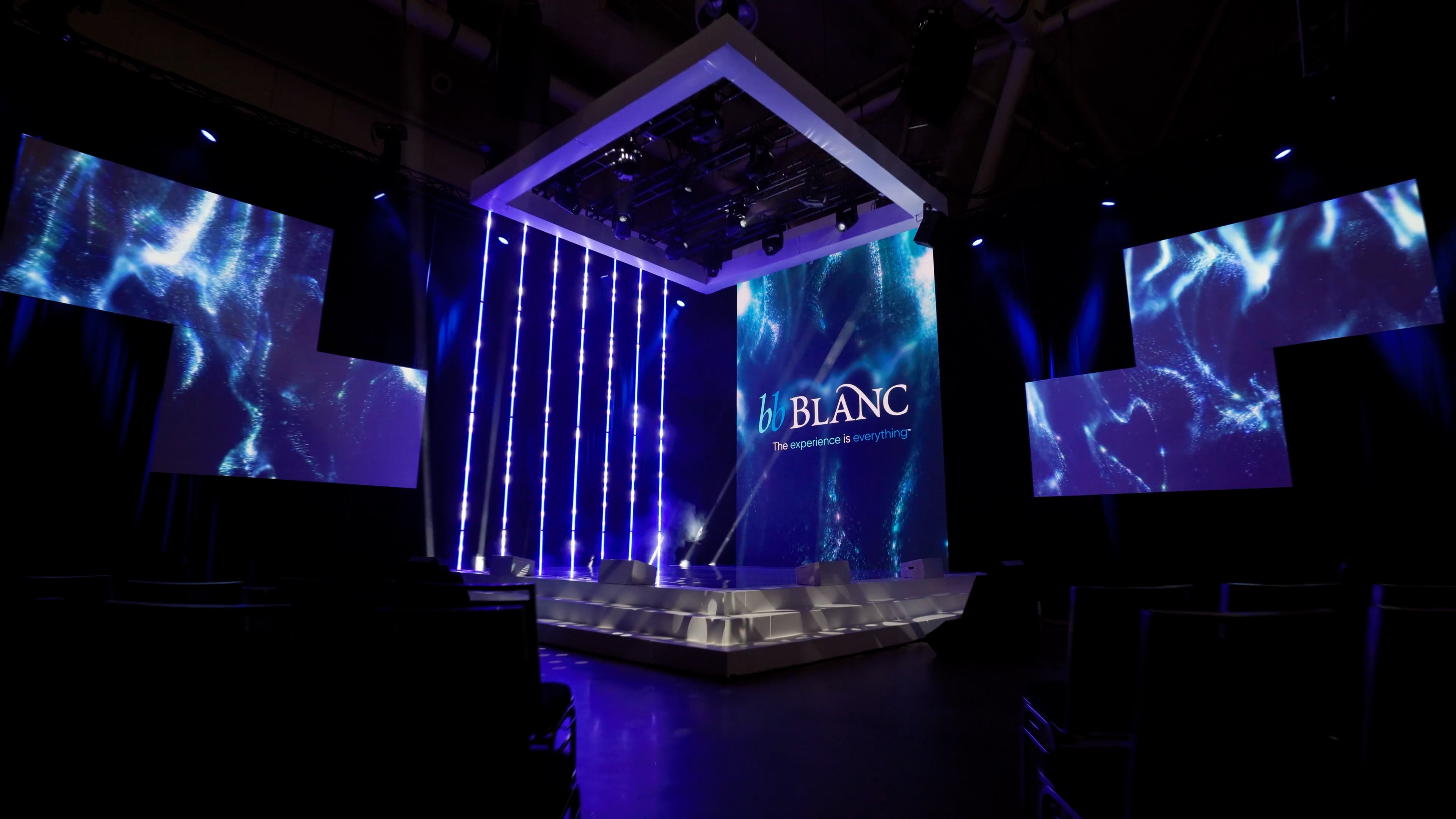
What Matters in a National Production Partner
If your organization operates nationally or across multiple regions, your partner needs to deliver consistent quality and creative vision from Vancouver to Halifax.
Multi-City Infrastructure, Crew, and Creative Continuity
This is where most national relationships fail. A company claims audio visual capability, but you discover they sub-rent equipment and crew in secondary markets, or they staff events with freelancers who've never worked together. Worse, they have one creative team in Toronto and generic execution in Calgary.
Ask directly:
Do they own equipment in multiple cities?
Do they have dedicated staff in other markets, or do they rely on sub-rentals?
Do they have consistent creative teams across regions, or do you get different designers for each city?
Can they provide references in at least three different provinces?
How do they ensure consistency in show direction and production quality across markets?
Real national audio visual capability means regional teams with both creative and technical depth, owned equipment, and training that's consistent across markets. It means the show caller in Vancouver is trained to your event the same way as the show caller in Toronto.
Our national model is built on creative continuity, not just geographic footprint. We're headquartered in Toronto with full-time teams and owned equipment across Vancouver, Ottawa, Montreal, Quebec City, New Brunswick, and Prince Edward Island. In the US, we operate in California, Las Vegas, Colorado, Florida, and Texas. But here's what matters: your account manager and creative vision travel with your event. Local partners provide equipment and labor, but the show direction, production standards, and creative approach stay consistent. A client running events in Toronto, Vancouver, and Montreal gets the same quality and the same account manager across all three cities. That's what real national capability looks like.
In-House Creative and Design Services: The Design Process
Equipment is a commodity. Design is not.
The difference between an event that feels branded and polished versus one that feels assembled is creative direction. A real audio visual production company follows a structured creative process:
Discovery and strategy.
Understanding your goals, audience, and desired emotional impact before any equipment is specified.
Concept development.
Collaborating on the narrative arc, visual identity, and key moments that make your event memorable.
Staging renders and design visualization.
Custom visual designs showing exactly how your stage, lighting, video, and spatial design will come together. You see it before you build it.
Content production.
Branded graphics, motion design, and custom video developed specifically for your event—not generic templates.
Camera direction and live switching.
Intentional camera work and multi-camera switching designed to capture key moments for live and hybrid audiences.
Sound design.
Audio mixed specifically for your venue, audience, and content—not generic presets.
Show calling and direction.
A professional show caller manages timing, cues, and technical elements to execute your vision flawlessly.
Lighting design that serves your story.
Strategic choices about mood, focus, visual hierarchy, and brand reinforcement—not just functional task lighting.
This is what separates experience design from equipment operation. If a company quotes you without a design phase, they're building to spec, not to impact. That's a red flag.
Equipment Ownership vs. Sub-Rental
Equipment you own is equipment you maintain, update, and know deeply. Equipment you sub-rent introduces risk:
Higher costs. Sub-rental markups add up.
Delayed delivery. Logistics complications with secondary suppliers.
Crew unfamiliarity.
Your team's technicians haven't trained on the gear.
Troubleshooting friction.
If something fails, you're coordinating with a third party instead of solving it in-house.
Ask your partner: What equipment do you own outright? What do you sub-rent, and why?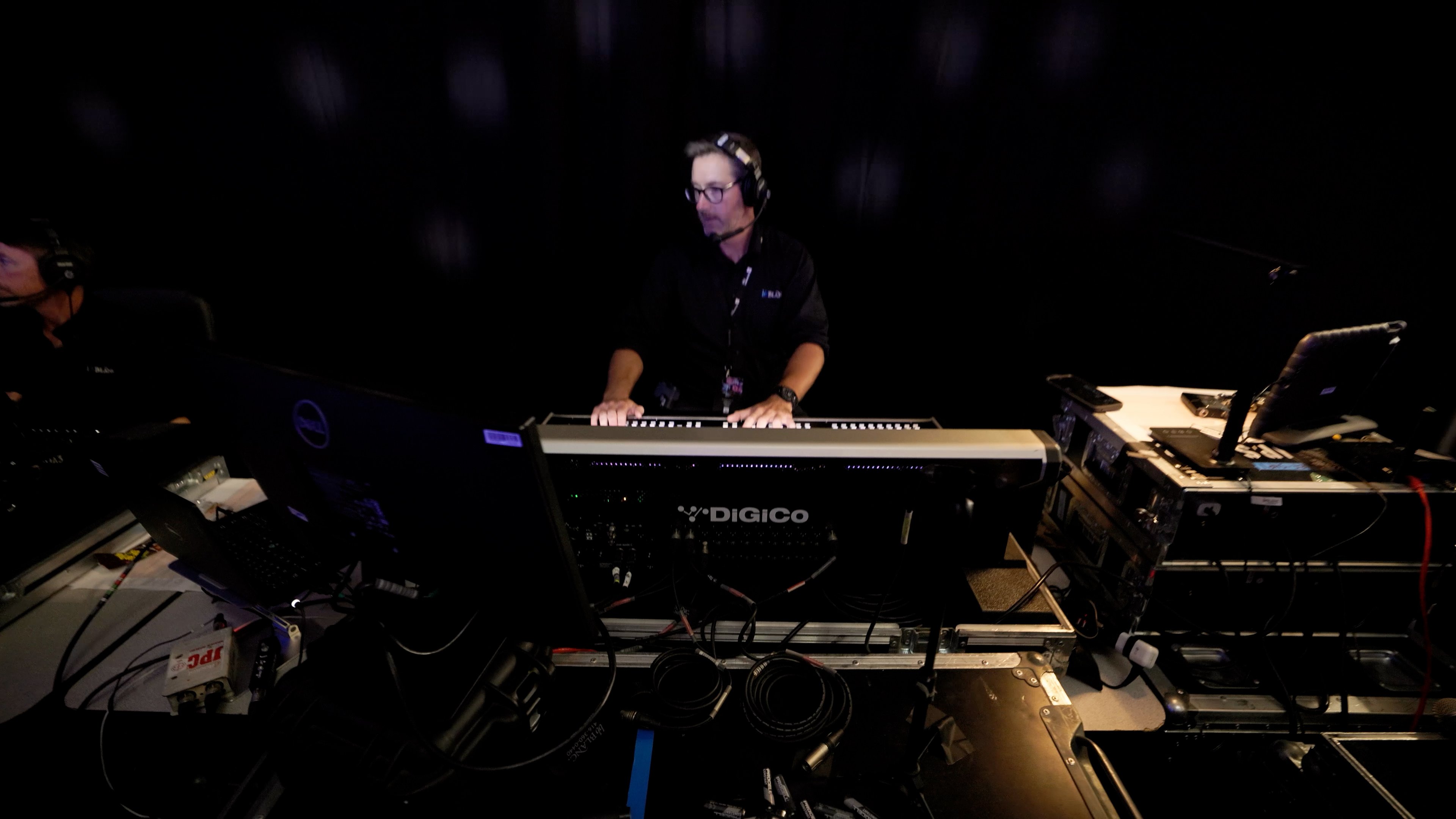
Dedicated Project Management and On-Site Authority
Large events are complex. Site surveys, technical rehearsals, contingency planning, real-time problem-solving—these require continuity and someone with decision-making authority.
Your audio visual partner should:
1.Assign a single project manager from first call to final technical check
2. Have that person stay with the event throughout planning and execution
3. Empower on-site crew—including show callers and technical directors—to solve problems and make creative decisions in real-time
4. Maintain clear communication channels before, during, and after the event
5. Provide 24/7 on-call support in case issues arise
6. When you have a dedicated account manager who owns the entire timeline and a technical team empowered to make decisions on the fly, you avoid hand-offs and surprises.
Show Direction and Show Calling as Core Capability
Professional show calling is not an optional add-on—it's the difference between a live event and managed chaos.
A professional show caller:
1. Works from a detailed run-of-show document that scripts every cue (video, lighting, audio, transitions, talent movement)
2. Communicates with all technical leads through headsets or intercom systems
3. Manages timing and pacing so moments land intentionally
4. Has authority to make split-second decisions when live conditions require adjustment
5. Coordinates with talent and speakers to ensure technical support is flawless
6. Ask your production company: Who calls the show on the day of my event? What's their experience? What's their process for preparing a run-of-show?
Talent Management and Entertainment Coordination
If your event includes live performers, speakers, or entertainment acts, your production company should handle coordination end-to-end:
Technical rider fulfillment.
Understanding what audio, lighting, video, and staging each performer needs and delivering it flawlessly.
Sound checks and rehearsals.
Building time for performers to test with your systems before going live.
On-stage support.
Having monitors, microphones, and cues ready for speakers and performers.
Artist coordination.
Managing logistics, scheduling, and communication with talent.
Contingency for performer no-shows or changes.
Having backup options and flexibility built into the show plan.
This capability separates full-service production from equipment-only vendors.
Hybrid and Virtual Event Capability
If your conference or town hall includes a livestream, remote participants, or hybrid format, your partner needs to treat that as integral production, not an afterthought.
Hybrid events require:
Multi-camera setup and switching designed for digital audiences, not just in-room attendees
Audio and lighting that work for both in-room and remote viewers
Dedicated broadcast operators managing streams and platform quality
Platform integration tested and bulletproof
Contingency plans for streaming failure and clear escalation procedures
Graphics and lower-thirds designed for screen legibility
Ask how many concurrent hybrid productions they manage per month. If the number is low, their team isn't experienced with the complexity. For a deep dive on planning audio visual for corporate conferences in Canada, read our guide on how to plan audio visual for corporate conferences in Toronto.
Production Requirements by Event Type
Different corporate events demand different technical and creative approaches. Your partner should understand these distinctions and have relevant experience with various event types.
National Conferences and AGMs
Corporate conferences are storytelling opportunities. Your production partner needs to design and execute the narrative arc across multiple days.
What matters:
Creative stage design that embodies your brand and messaging
Branded content strategy that supports speaker narratives with relevant visuals
Multi-camera production and live switching designed to capture speaker moments for live and hybrid audiences
Professional show direction managing transitions, speaker cues, and timing across sessions
Large-scale video walls visible from every seat with crisp image quality
Reliable audio for main stage and breakout sessions, mixed specifically for room acoustics
Multi-day consistency in lighting, audio, and video quality
Technical rehearsal time built into the schedule for full crew coordination
Polished presentation visuals that reinforce your brand and speaker messaging
Common pitfalls:
Main screen too small for the room or positioned poorly
Inadequate crew for simultaneous breakout sessions
Audio mixing that wasn't tested in the actual venue
No technical rehearsal time, problems discovered during live broadcast
Generic stage design that doesn't reflect conference theme or brand
Poor speaker support (no rehearsal with audio or video equipment)
Multi-City Roadshows and Product Launches
Product launches and roadshows demand repeatability with creative impact. Every city is a fresh audience, so execution must be flawless and consistent across Canada.
What matters:
Repeatable creative design that maintains brand consistency and narrative across cities
Custom staging renders showing exactly how your stage will look in each venue
Professional show direction at every city ensuring consistent pacing and moment landing
Rapid setup and teardown (typically one or two nights per city) without sacrificing quality
Brand consistency nationally from Vancouver to Montreal
Flawless execution because each city is a limited-duration, high-stakes event
Local crew coordination without quality variance
Venue-specific planning accounting for different room acoustics and sightlines
Common pitfalls:
Assuming a system designed for Toronto will work identically in Calgary without a proper site survey
Inconsistent crew training across cities leading to quality gaps
Shipping delays that compress setup time and reduce technical rehearsal
Different venue capabilities not accounted for in planning
Generic execution—same templates, different cities—instead of venue-specific adaptation
Poor show calling consistency across markets
Trade Shows and Exhibitions
Trade shows are about stand traffic and visual impact. Your production partner needs to create an experience that holds attention and drives engagement.
What matters:
Visual impact from distance using LED video walls or projection to stop foot traffic
Interactive engagement that holds attention and invites exploration
Professional booth technical support throughout the multi-day show
Equipment reliability over extended duration with minimal downtime
Branded experience design that differentiates your booth from competitors
Content strategy that rotates messaging or shows highlight reels to keep the booth fresh
For a detailed playbook, read our guide on LED booths and trade show AV in Canada.
Corporate Galas and Awards Ceremonies
Galas demand theatrical production and flawless execution. Your production partner needs to design moments that create memory.
What matters:
Scenic design and staging that creates sophistication and visual grandeur
Lighting design that creates atmosphere, highlights key moments, and supports emotional pacing
Professional show calling managing award announcements, performance cues, and transitions
Live performance integration coordinating speakers, performances, and technical precision
Polished production values throughout a long evening—no dead time, no clunky transitions
Talent coordination managing audio for speakers and performers
Video content that builds anticipation for award categories or surprise moments
Transition management so every shift from speeches to performances to dining feels intentional
Common pitfalls:
Lighting that's too functional rather than atmospheric
Poor camera work on award presentations for recording or hybrid streaming
Inadequate audio rehearsal with live performers and speakers
Transitions between segments that feel clunky instead of polished
No show calling, leaving timing and cueing to chance
Talent support gaps (no sound checks, unclear speaker briefs on technical support)
The Honda Holiday Party is a perfect example of what we do with galas. We designed a large-scale production with custom LED screen configurations, intelligent lighting that shifted atmosphere across different program segments, and multi-camera video production. We created staging renders showing the full creative vision, then executed with meticulous attention to every transition. A 5:1 safety rigging setup with dual brake motors meant every visual element was secure. Redundant systems meant if one component failed, guests would never know. The result wasn't just a gala—it transformed a convention space into a branded celebration environment where every moment felt intentional and every guest felt the care we put into their experience.
Town Halls and Internal Communications Events
Town halls shape how employees perceive leadership and company direction. Your production partner needs to ensure every voice is heard and every message lands clearly.
What matters:
Crystal-clear audio so employees in every part of the room can hear and understand leadership messaging
Professional show direction managing executive speaking order and pacing
Engagement tools (Q&A systems, polling, live interaction features)
Video support for recorded messages from remote leaders or location-specific content
Recording capability for those who can't attend live, with proper audio and video quality
Inclusive sightline management across the room so no attendee feels excluded
Audience microphone management for clear Q&A sessions
Common pitfalls:
Treating a town hall as a small event when it shapes employee perception of leadership
Poor microphone coverage for audience Q&A
Inadequate sightline planning leaving back-of-room attendees disconnected
Audio levels inconsistent across a large room
No support for executive speakers (notes, teleprompter, audio cues)
Recorded content that's awkwardly integrated rather than professionally produced
The CMEE 2024 case study is a good example of our scale and coordination. We served as the official AV partner at the Canadian Meetings + Events Expo at the Metro Toronto Convention Centre, creating the "bb Experience Hub." We deployed 20+ onsite professionals managing multiple concurrent sessions across the two-day expo. This is the kind of production where owning a 45,000 sq ft warehouse with all equipment maintained in-house makes a real difference. You're not scrambling to find rental equipment or hoping a third-party vendor comes through. Your infrastructure supports your creativity, and your team executes with confidence.
How to Evaluate AV Companies: Key Questions
Before committing to a production partner, get clarity on their process, capabilities, and approach. These questions reveal competence versus marketing talk.
1. What is your creative process from initial consultation to post-event delivery?
Look for a structured, disciplined approach: discovery meeting to understand goals, venue site survey, design phase with staging renders and content strategy, technical rehearsal with full crew, contingency planning, and post-event recap. If they can't clearly articulate their creative process, that's a warning sign. They should show you examples of staging renders from previous projects.
2. Who is my primary contact, and will that person be on-site during my event?
You want one person you trust, from planning through execution. If they hand you off to different contacts or a project manager who doesn't attend the event, you've lost continuity. Your account manager should be your single point of contact throughout the timeline.
3. Do you own the major equipment, or do you sub-rent?
Push for transparency. What percentage of equipment is owned versus sub-rented? What's the reasoning? Equipment ownership tells you about their commitment to your success versus treating your event as a transaction.
4. Do you have an in-house creative team?
Ask about their designers, content producers, and creative directors. Can they show you staging renders and motion graphics from past projects? Do they develop custom content in-house, or do they source templates? Real production companies build custom creative for each event.
5. Can you show me staging renders before I commit to your scope?
Any production company worth hiring should provide custom staging renders showing exactly how your stage, lighting, video, and spatial design will come together. These should be specific to your venue and brand, not generic renderings.
6. Who calls the show on the day of my event, and what's their experience?
A professional show caller is essential for flawless execution. Ask about their specific experience with events like yours. What's their background? How many events per year do they call? What's their process for preparing a run-of-show document?
7. How do you ensure consistency across multi-city events?
Ask for specific examples. How do you train crew in different markets? How do you maintain equipment standards across regions? What happens when a city venue has different specifications or technical capabilities?
8. What happens if equipment fails on the day of your event?
A good answer includes backup equipment on-site, redundant systems (dual monitors, backup projectors, wireless mic backups), and a clear decision-making framework. A bad answer is "we'll call the rental company." Your partner should have contingency for every critical component.
9. How do you approach sound design and audio mixing for a large room?
A bad answer: "We turn it up." A good answer: Site survey to assess acoustics, system design specific to the venue (not cookie-cutter), RF microphone management and diversity, real-time mixing by a skilled audio engineer, and testing in the actual room before the event.
10. What is your livestream and hybrid production capability?
Ask how many concurrent hybrid events they produce per month, which platforms they're experienced with (YouTube, LinkedIn, custom platforms), and how they handle redundancy if the stream fails. Do they have dedicated broadcast operators? How do they ensure audio and lighting work for both in-room and remote viewers?
11. Can you provide references for events similar in scale and complexity to mine?
Call those references. Ask specifically about consistency, problem-solving, show direction quality, and whether the company behaved like a vendor or a true partner.
12. What is your cancellation and change order policy?
Understand what happens if your event is postponed or scope changes. A transparent partner explains this upfront, not buried in a contract.
13. How do you approach design and creative input?
Do they push back on ideas that won't work? Do they offer original suggestions and improvements based on their production experience? Or do they build exactly to spec and disappear if problems arise? The best partners are thoughtful collaborators, not order-takers. They should challenge you in service of a better outcome.
Let me address a few of these directly. "Do you own your equipment?" Yes—all of it. Our 45,000 sq ft facility houses the complete inventory of AV systems, rigging, staging, and lighting equipment. Dedicated Logistics, Inventory, Quality Control, and Repair teams maintain everything to manufacturer specifications. We don't depend on third-party rental availability. "Do you provide staging renders?" Every significant production gets custom photorealistic renders before you commit. You see screen placement, lighting design, staging configuration—all specific to your venue. "What's your redundancy plan?" All rigging at 5:1 safety factor with dual brake motors. Backup switchers and media servers on-site. Audio consoles on battery backup. Redundant cabling runs. We brief safety before every setup and strike, and every crew member knows the contingency plan.
For more guidance on choosing the right partner, read our comprehensive guide on how to choose an event production company in Toronto. To stay current on the latest audio visual technology trends, check out our InfoComm 2025 trends recap.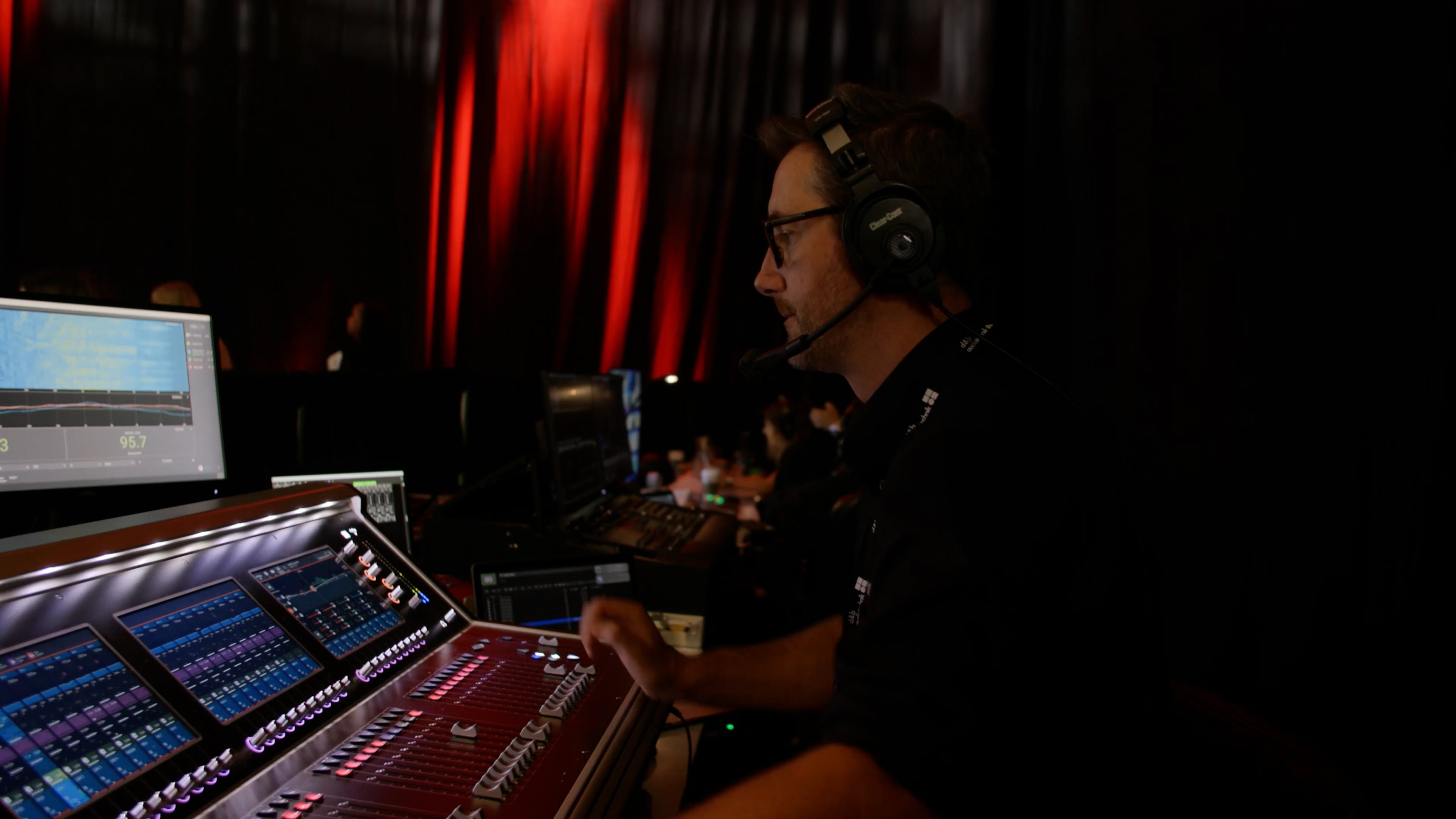
Partner with bb Blanc for Audio Visual Production in Canada
Corporate events across Canada deserve more than equipment rental. They deserve a partner who understands how creative vision, technical execution, show direction, and brand consistency come together to create a memory.
Since 2008, bb Blanc has been one of Canada's leading independently owned creative production companies, delivering live, hybrid, and virtual experiences across Canada and the United States. Our philosophy is simple: The Experience is Everything.
With 15+ years of production expertise, a team of 82 professionals and 200+ freelancers, and a 45,000 sq ft production facility with full in-house equipment ownership, we bring the infrastructure and creative depth that national audio visual events demand. We have dedicated teams across Canada—Toronto, Vancouver, Calgary, Montreal, Ottawa, and beyond—ensuring consistent creative quality and technical execution in every market.
Our production services span the full spectrum:
Design + Creative.
Custom staging renders, brand-aligned visual concepts, and experience design developed in-house by creative directors and designers.
Content Strategy & Creation.
Video production, motion graphics, animation, and branded content developed specifically for your event.
Show Direction & Technical Management.
Professional show calling, full event program management, and venue coordination.
Production Services.
Project management, technical direction, show production, and comprehensive logistics management.
Talent Management.
International entertainment acts, artist coordination, and complete technical rider fulfillment.
AV Infrastructure.
Intelligent lighting design, atmospheric effects, custom projection, LED systems, professional rigging (5:1 safety factor with dual brake motors), and full power distribution.
Staging & Scenic Design.
Custom scenic elements, professional draping, display furniture—all fire-code compliant.
IT & Presenter Support.
Complete networking, speaker support systems, real-time presentation tools, and technical rehearsal.
Hybrid + Virtual Production.
Studio 41—our dedicated 896 sq ft broadcast and content studio with 34 control stations—supports webcasts, hybrid productions, content creation, and professional live broadcasts.
Studio 41 is our dedicated hub for broadcast and content creation, enabling us to produce multi-camera hybrid events, develop custom content in advance, and manage complex livestreams with the production quality your brand deserves.
From conferences and trade shows to galas, product launches, executive programs, and large-scale productions for audiences of 5,000+, we deliver consistent quality and creative excellence across Canada and the United States—Toronto, Vancouver, Calgary, Montreal, Ottawa, Winnipeg, and beyond. Your dedicated account manager owns the entire project timeline—no hand-offs, no surprises. And with over 99% client satisfaction across more than 500 corporate events over the past two years, our track record speaks for itself.
Our production partners include Honda, TD Bank, Thomson Reuters, CRA, Freeman, and Ontario Nurses' Association.
Ready to start planning your next corporate audio visual production? Contact our team today.
Frequently Asked Questions

