


Lighting is not decoration. In corporate events, it's narrative architecture.
When done well, strategic lighting design controls how your audience perceives the room, guides their attention, reinforces your brand, and creates the emotional landscape for your message. When done poorly—or worse, ignored entirely—even the best content and venue fall flat under fluorescent wash or harsh spotlights.
Over 20 years of Toronto event production, bb Blanc has learned that lighting design separates professional corporate events from ones that feel amateur. The difference isn't complexity. It's intentionality. It's understanding that every light serves a purpose: revealing a speaker's credibility, creating intimacy in a 500-person ballroom, or making a product launch moment unforgettable.
This guide walks you through event lighting design as a strategic discipline—not as an afterthought added three days before load-in.
The Role of Lighting in Corporate Event Storytelling
Before talking about fixtures, let's talk about purpose.
Lighting tells a story. It creates hierarchy, emphasis, and emotional context. In a corporate gala, soft, warm lighting on the stage signals elegance and approachability. In a product launch, sharp, high-contrast lighting with dramatic color shifts signals innovation and energy. In a conference, even, bright lighting on the presenter establishes credibility and authority.
This is why lighting design needs to happen early. Not in the final week. Not once the room is booked. Early enough that it's integrated into your overall creative direction.
Consider a common corporate scenario: an annual awards gala. The moment a winner is announced, the lights shift. A follow spot picks them out as they walk to stage. Uplighting changes color to match corporate brand colors. The stage wash intensifies. Music builds. These aren't accidents. They're design choices that amplify emotion and significance.
Without that lighting choreography, the same moment feels flat. The winner walks to the stage under the same lighting as they were sitting under five minutes earlier. No contrast. No drama. No sense of occasion.
Strategic lighting answers these questions:
- What is this moment? (celebration, revelation, serious announcement, transition)
- Who should the audience look at? (the speaker, the screen, the product, the stage)
- What should they feel? (pride, excitement, trust, connection)
- What brand values does this lighting reinforce? (innovation, tradition, sophistication, energy)
Once you've answered those questions, you can design the lighting to serve them.
Lighting Types Every Event Planner Should Know
Corporate event lighting uses several core fixture types. Each serves a different purpose, and understanding them helps you have better conversations with your production partner.
Intelligent Lighting (Moving Heads)
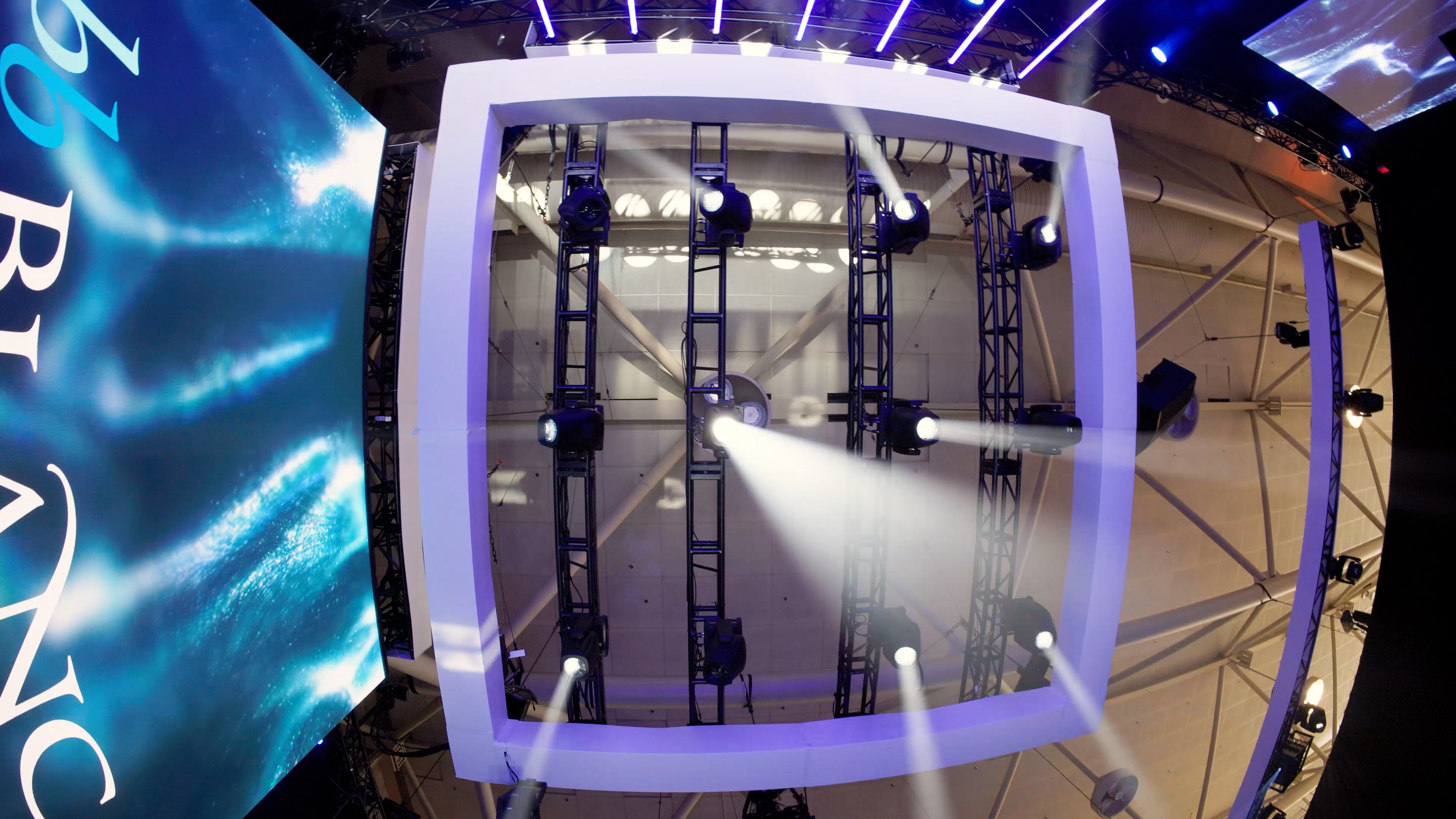
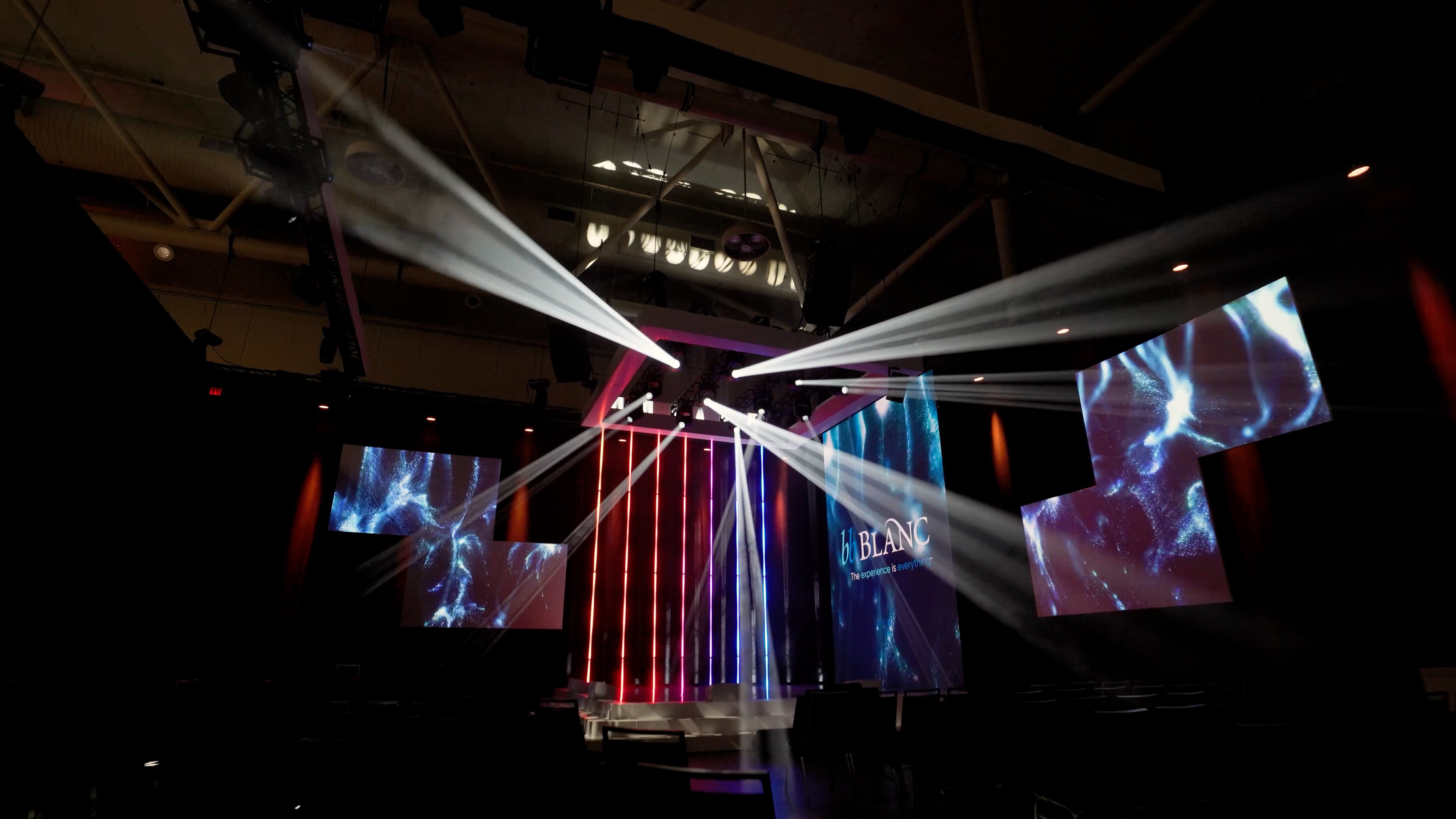
Intelligent lights—also called moving heads or spot lights—are the precision instruments of event lighting. They pan, tilt, change color, adjust focus, and can project patterns (gobos) across the room. They're controlled by a lighting console during the event, which means they can follow action, change intensity, and create dynamic effects in real-time.
When to use them: Product reveals, award presentations, speaker transitions, gala performances, any moment that needs emphasis or drama. Moving heads are particularly effective in creating focus—one follow spot on a speaker while the rest of the stage is dimmed creates immediate attention and authority.
Reality check: Moving heads require a trained operator and pre-programmed cues. This isn't plug-and-play. But the investment pays dividends in professional appearance and creative control.
LED Wash Lights
LED wash lights flood a large area with even, adjustable color. Unlike traditional moving heads, they don't have precise focus or gobos, but they can cover more area with smooth color. They're crucial for setting overall mood and ambient tone.
When to use them: Creating colored backgrounds on stage, establishing mood in different room zones, ambient color reinforcement throughout the event, transitions between segments. A common example: blue LED wash during a serious corporate announcement, shifting to gold during celebration moments.
Advantage: LEDs are efficient, color-accurate, and can be adjusted quickly without retuning. They can also be networked together and controlled from a single console, which makes complex color schemes feasible.
Uplighting
Uplighting points light upward from the floor (usually at the base of walls, on stage legs, or around architectural features). It's essential for adding dimension to a space and for reinforcing branding through color.
When to use it: Virtually every corporate event above 50 people. Uplighting transforms a flat room into one with depth and visual interest. In a ballroom, uplighting around columns and perimeter walls adds drama without being theatrical. Strategically positioned uplighting behind a stage creates depth and separation.
Brand application: Uplighting in your corporate colors around the stage perimeter reinforces branding without being literal or heavy-handed. A financial services firm might use deep blue uplighting; a tech company might use bright white with accent colors.
Pin Spots
Pin spots are narrow-beam, low-power lights that create a tight pool of light—typically used to illuminate table centerpieces, highlight a speaker at a podium, or spotlight an award recipient in a crowd. They create visual focus without washing out the surrounding space.
When to use them: Table lighting in galas, highlighting specific individuals, creating pools of light on stage, drawing attention to displays or products. Pin spots are particularly effective at galas where you want each decorated table to feel special without overwhelming the main stage lighting.
Technical note: Pin spots are usually on a separate circuit from main stage lighting, which allows independent control and creates layering.
Gobos (Projection Patterns)
A gobo is a template inserted into a moving head that projects a pattern—your company logo, geometric shapes, branded designs—onto a surface. This is where lighting becomes branding.
When to use them: Logo projection on the stage backdrop, geometric patterns to add texture to walls, thematic patterns for the event (snowflakes for holiday parties, leaf patterns for spring events). Logo gobos are particularly effective at product launches and corporate celebrations where you want your brand visible in multiple dimensions.
Design consideration: Gobos work best on surfaces that can be darkened slightly—a dark stage backdrop, a dimmed wall, or a textured surface. Projecting a logo onto a bright white wall loses impact.
Lighting is one of the most powerful tools in corporate AV Toronto production, capable of transforming a generic ballroom into a branded environment. For gala production Toronto events, intelligent lighting rigs create the drama and elegance the format demands. Strategic lighting design elevates every element of the production, from stage presence to audience energy.
Designing a Lighting Plot for Different Event Types
Lighting design varies significantly based on event type and objectives. Here's how we approach it.
Corporate Galas and Awards Ceremonies
A gala lighting design creates elegance, recognizes achievement, and maintains focus on honorees. The plot typically includes:
- Stage lighting: Two to four moving head spots for focus on speakers and award recipients, positioned to avoid harsh shadows on faces. One follow spot operator for dynamic tracking. Soft, warm LED wash (3000K color temperature) for base stage lighting.
- Uplighting: Corporate colors along the stage perimeter and key architectural features. Warm white ambient uplighting in dining areas, transitioning to brand color uplighting when recognition moments begin.
- Table pin spots: Low-power spots on or near table centerpieces, creating intimate pools of light while keeping focus on stage during speeches.
- Ambient room lighting: Progressive dimming as the event moves from cocktail to dinner to main program, signaling transitions and building focus toward stage.
Lighting transitions at a gala are critical. When an award is presented, stage lighting intensifies and room lighting dims slightly—this automatic shift tells the audience "pay attention now." When presentation is over, room lighting comes back up, signaling the transition is complete.
Conferences and Multi-Day Events
Conferences demand different lighting priorities: clarity, even coverage, consistency across multiple days, and support for high-volume speaker transitions.
- Stage lighting: High-output LED wash for presenter visibility and video camera clarity. Minimal moving head work (which requires operator attention at every change). Pin spots on podium and stage edges.
- Screen support: Lighting rigged to avoid reflections on projection screens or LED walls, with intensity that allows both stage and screen to be visible simultaneously.
- Ambient: Even, bright lighting in breakout rooms for note-taking visibility. Slightly dimmed keynote lighting to draw focus to stage and screens.
- Flexibility: Lighting cues are typically simple (two to three looks per session) because the focus is on speaker clarity, not drama.
Conference note: We often recommend confidence monitors for presenters and a real-time monitor display on stage so speakers can see their slides. Lighting supports this by ensuring both speaker and screen are visible without harsh reflection.
Product Launches
Product launch lighting is theatrical and precise. Every moment builds to the reveal.
- Pre-reveal lighting: Dramatic, high-contrast lighting. A single spotlight on the emcee. Dark stage. Audience can't see the product area yet.
- Reveal lighting: Moving head follow spot hits the product as it's unveiled. Intelligent lights shift to dynamic colors—bright, energetic colors that signal newness and excitement. The intensity and movement create visual momentum.
- Demo lighting: Careful, even lighting on the product area (on a riser, table, or stage platform) so it's visible from all angles. Camera operators need clean light to capture the product from multiple distances.
- Sustained lighting: After the reveal moment, product lighting transitions to a steady, professional look that supports live demonstration and audience photography.
Conferences and General Sessions
Straightforward, professional lighting that puts focus on the stage and content.
- Stage wash: Even, bright LED wash in neutral white (5000-5600K) for presenter visibility and video camera clarity.
- Stage architecture: Uplight or sidelight to add dimension and separate stage from background.
- Ambient room: Adequate general lighting so the audience can take notes and see materials without being distracted by ambient brightness.
- Minimal movement: Lighting stays consistent throughout; changes are rare and only to mark segment transitions.
Mood and Atmosphere: Color Temperature, Intensity, and Transitions
Three technical elements control how lighting makes people feel: color temperature, intensity, and transition speed.
Color Temperature
Color temperature is measured in Kelvin (K) and describes whether light feels warm (more yellow/orange) or cool (more blue).
- 2700K-3000K (Warm white): Creates elegance, intimacy, and relaxation. Used in upscale galas, award ceremonies, and intimate dinners. Warm light makes people feel comfortable and valued.
- 4000K (Neutral white): Balanced, professional, and clear. Used in conferences and business meetings where clarity is priority.
- 5000K-5600K (Cool white/daylight): Creates energy, clarity, and modernity. Used in product launches, tech events, and energetic presentations.
Psychological effect: Warm lighting signals "occasion" and "celebration." Cool lighting signals "clarity" and "innovation." The right color temperature for your event reinforces its purpose at a subconscious level.
In a gala, shifting from 3000K during cocktail hour to 4000K during dinner to 3500K during the main program creates a sense of progression and heightens emotional peaks.
Intensity
How bright is the light?
In corporate events, we use intensity strategically to direct focus. A keynote speaker under bright, even light while the rest of the stage is dim creates emphasis. An audience dining under warm, moderate light while the stage is bright creates hierarchy and focus.
Intensity also affects energy. A room lit to 100% brightness feels active and urgent. A room lit to 60-70% feels more relaxed. Progressive intensity changes through an event—starting moderate, building to peaks during key moments, then returning to baseline—creates natural rhythm.
Transition Speed
How fast does the light change?
Fade transitions (3-5 seconds): Professional, smooth, unobtrusive. Used between segments or mood shifts. The audience notices the effect but not the transition itself.
Snap transitions (immediate): Creates surprise and emphasis. Used sparingly for dramatic moments—product reveals, award announcements, major announcements.
No transition (static): Used for events where consistency matters more than drama (conferences, long sessions).
The speed of a transition tells a story. A slow, smooth fade says "this is deliberate and controlled." A snap says "this is sudden and important."
Branded Lighting: Logo Projection, Corporate Colors, and Identity Reinforcement
Branded lighting is how you make corporate identity visible—not with signage, but with light itself.
Logo Projection (Gobos)
A projected logo is powerful because it's integrated into the visual design, not stuck on a wall. A company logo projected onto the stage backdrop during remarks, shifting to different colors as segments progress, becomes part of the visual narrative.
Effective logo projection:
- Placement: On a surface that can be darkened (stage backdrop, dark wall, or textured surface). Projecting a small logo onto a bright white wall gets lost.
- Size: Large enough to be recognizable from the back of the room. A logo that's too small defeats the purpose.
- Color: Your corporate color (or complementary color) so it reinforces, not competes with, stage lighting.
- Timing: Logo appears during specific moments (opening remarks, closing, award presentations) rather than running the entire event. This creates emphasis and avoids monotony.
Corporate Color Uplighting
This is the most direct form of branded lighting: surrounding your stage or key areas with uplighting in your corporate colors.
A financial services firm might use deep blue uplighting around stage perimeter and key architectural features throughout the event. A tech company might use bright white with accent pops of brand color. A healthcare organization might use warm, inviting tones.
The effect is subliminal but powerful. After two hours of being bathed in your corporate color, the audience associates that color—and the emotions it evokes—with your company and message.
Important consideration: Color uplighting should complement, not overpower, the stage lighting. If your stage wash is 3000K warm white and your uplighting is bright magenta, they'll clash. The colors should work together harmoniously.
Dynamic Branded Sequences
For major moments (product reveals, award presentations, annual achievement announcements), lighting can be choreographed with your brand colors:
- Opening: Neutral, professional lighting
- Build: Intensity increases, corporate colors begin appearing in uplighting
- Peak: Moving head spotlights shift to brand color, gobos project logo, entire lighting rig moves in sync
- Resolution: Lighting settles into a sustained look featuring your brand colors prominently
This is where lighting becomes a brand experience, not just illumination.
Outdoor vs. Indoor Event Lighting Considerations in Toronto
Toronto's outdoor event season is limited (May-September reliably; April and October are unpredictable), and outdoor lighting demands significantly different planning than indoor events.
Indoor Event Lighting (Toronto Venues)
Indoor venues provide controlled ambient light conditions, which makes lighting design more predictable.
- Ambient light management: You control how much ambient light exists, making it easier to create contrast and focus.
- Fixture placement: Rigging points exist (grid, lighting bars, trusses). Moving heads and wash lights can be positioned precisely.
- Weather: No rain, wind, or temperature fluctuations affecting equipment or comfort.
- Power: Venues typically provide adequate power and distribution infrastructure.
Challenge in Toronto: Many corporate venues (hotels, convention centers) have bright, uncontrollable overhead lighting. Coordinating with the venue to dim general lighting during presentations is crucial. A 50-person boardroom with overhead fluorescents overpowering your carefully designed stage lighting is a common problem we solve by working with venue tech teams to disable or dim conflicting systems.
Outdoor Event Lighting (Toronto Venues)
Outdoor events in Toronto typically happen on venue grounds (hotel patios, institutional lawns, park pavilions). The challenges are significant:
- Ambient light competition: Daylight, building light spillage, and street lighting all compete with event lighting. You need more powerful fixtures than you'd use indoors.
- Power infrastructure: Most outdoor spaces don't have rigging, require temporary power distribution, and involve cable management across grounds.
- Weather: Wind, sudden temperature drops, and unexpected rain (even in summer) affect equipment reliability and operator comfort.
- Audience comfort: Outdoor lighting needs to provide both task lighting (on stage/speakers) and ambient lighting (so guests can navigate and socialize safely).
Typical outdoor rig (100-200 person event):
- Multiple LED wash lights for stage and ambient area coverage
- Uplighting on surrounding landscaping or architectural features
- Minimal moving head work (which is harder to control outdoors with wind and ambient light)
- Backup power generators (outdoor venues rarely have adequate power distribution)
- Strategic placement to avoid lighting the audience directly (outdoor events need front-of-audience lighting, not wash that blinds attendees)
Timing consideration: In May-June, twilight lasts until 9 PM. An 6 PM outdoor start means you're lighting through twilight into darkness—which requires programming two completely different looks as ambient light drops. By August, twilight is gone by 8:30 PM, so your lighting dominates earlier in the event.
Working with Your AV Partner on Lighting Design
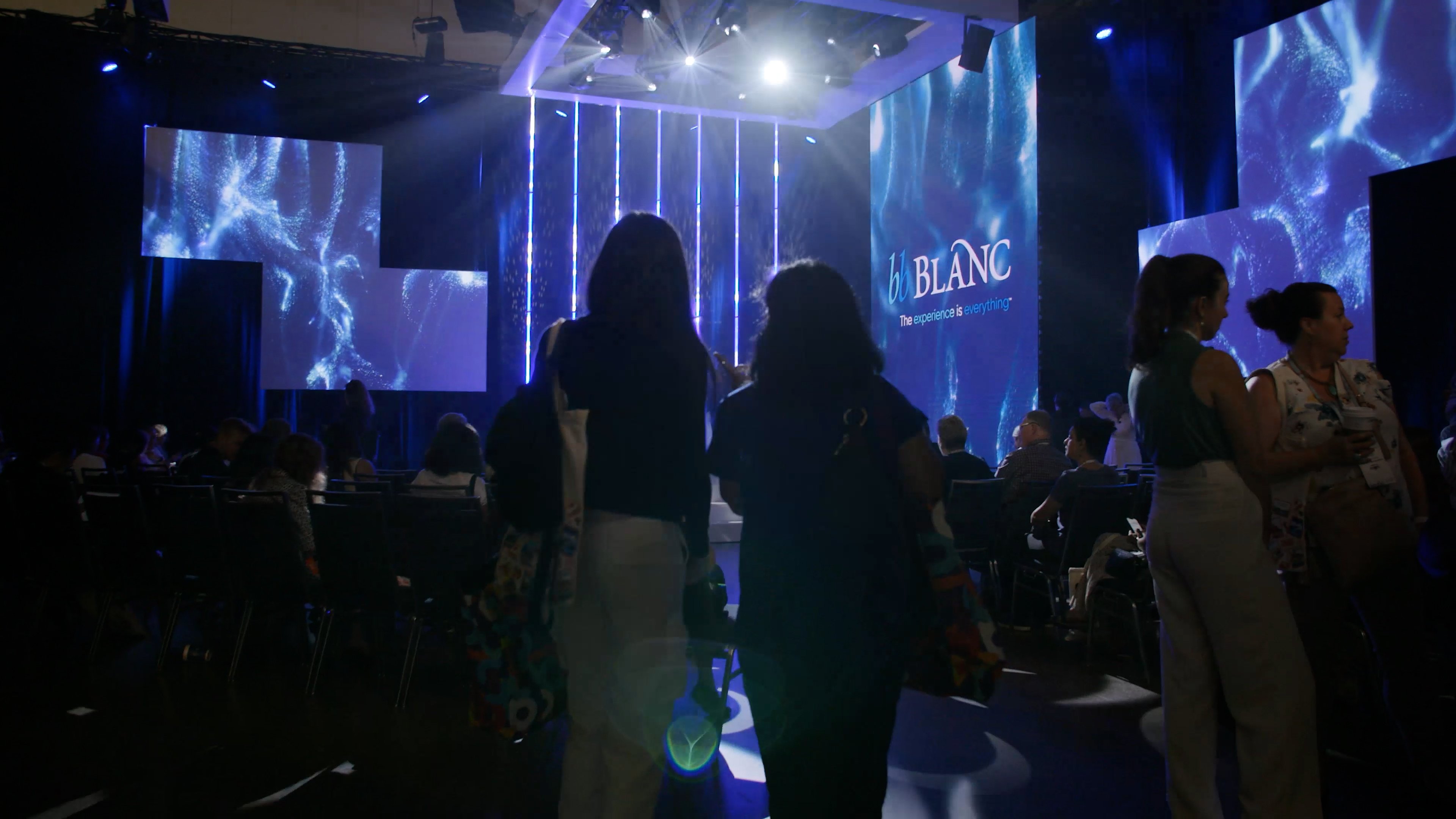
Strategic lighting design starts early and requires partnership between your vision and technical expertise.
The Lighting Design Conversation (8-12 Weeks Before Event)
At bb Blanc, we recommend this conversation happen early with your production partner. Before any equipment is specified, discuss:
-
Event story and key moments: What are the three to five moments that matter most? (emcee opening, award announcements, speaker presentations, product reveal, closing remarks). Lighting will support these moments differently.
-
Audience size and venue: Room size affects fixture selection and placement. A 200-person boardroom needs different lighting than a 1,000-person ballroom.
-
Brand identity and color palette: What are your corporate colors? What emotional tone should lighting reinforce? Sophisticated? Energetic? Warm and inclusive?
-
Technology integration: Will there be projection screens, LED walls, or video content? Lighting needs to support screen visibility while also adding dimension to the stage.
-
Staffing and operation: Will lighting be controlled by a trained operator running a lighting console, or do you prefer automated scenes with minimal real-time adjustment? Operator-driven lighting allows dynamic response; automated lighting is simpler but less flexible.
-
Budget alignment: Discuss what's achievable within your production scope. Some effects (full projection mapping) require more investment than others (coordinated uplighting). Your partner should explain trade-offs clearly.
The Technical Design Phase (6-8 Weeks Before)
Your AV partner creates a lighting plot—a diagram showing:
- Fixture types and quantities: What lights are being used and how many of each
- Fixture placement: Where moving heads, washes, and uplighting are positioned
- Control method: How lighting will be operated (console, wireless control, automated)
- Cue list: What lighting looks happen at which moments in the run-of-show
- Power and distribution: How equipment is powered and how cables are routed
You should review this plot and be able to ask: "Why is a moving head positioned there? What moments use the uplighting? How does this support our key stories?"
A good lighting design document feels intentional, not random. Every fixture serves a purpose.
Rehearsal and Refinement (2-4 Weeks Before)
Before event day, your team should participate in a rehearsal where:
- Lighting cues are tested: Are the color temperatures right? Is the intensity working? Are transitions smooth?
- Camera visibility is checked: If your event will be filmed or live-streamed, lighting is tested with actual cameras to ensure visibility and avoid glare
- Timing is refined: Do lighting changes happen at the right moment during remarks? Is there enough time for intensity to build before a reveal?
- Contingencies are planned: If a moving head fails, what's the backup? If an operator misses a cue, how is it recovered?
This rehearsal is where you catch problems and refine the design. It's the difference between lighting that feels polished and lighting that feels improvised.
Related Articles
Looking to integrate lighting with your overall event production strategy? Explore these complementary topics:
- Product Launch Events – Using AV to Wow — How to choreograph lighting with product reveal moments for maximum impact
- Projection Mapping for Corporate Events — Advanced visual techniques that work alongside lighting design for immersive experiences
- LED Booths & Trade Show AV in Canada — How to coordinate lighting design with LED walls and projection content For comprehensive event production support—from initial vision to post-event content—bb Blanc's audiovisual production services cover every technical element of corporate events.
Ready to discuss your next event?
Contact bb Blanc to start the conversation with our production team.
FAQ

